

Explore the magic of dyeing clothing to give your old clothes a new life and new look. An upcycling project is a creative and sustainable approach to restoring clothing. By doing so, you can also help reduce textile waste by extending the lifespan of your garments. Whether you want to refresh a dull shirt or make something totally unique, fabric dyeing for beginners is full of possibilities. It’s a great way to reuse clothes and be kinder to our planet. With different DIY fabric dyeing methods, you can personalize your clothes. Each piece becomes a special work of art.
Key Takeaways
- Fabric dyeing transforms old clothes into vibrant art.
- Embrace eco-friendly fashion through upcycling.
- Explore numerous DIY fabric dyeing techniques.
- Create one-of-a-kind customized textiles.
- Perfect for beginners looking to get creative.
Introduction to Fabric Dyeing
Dyeing fabric is a way to make plain fabrics look like an art form. Dyeing fabrics has a rich historical and cultural significance, with various techniques evolving over centuries to create vibrant and meaningful designs. Natural dyeing is an eco-friendly method for coloring fabrics using common plants, fruits, and vegetables. Fabric dyeing can breathe life into old garments, making them look new and vibrant. This beginners guide to fabric dyeing will show you how people have colored clothes for years. It’s not just fun; it makes old clothes look new and is good for the planet.
What is Fabric Dyeing?
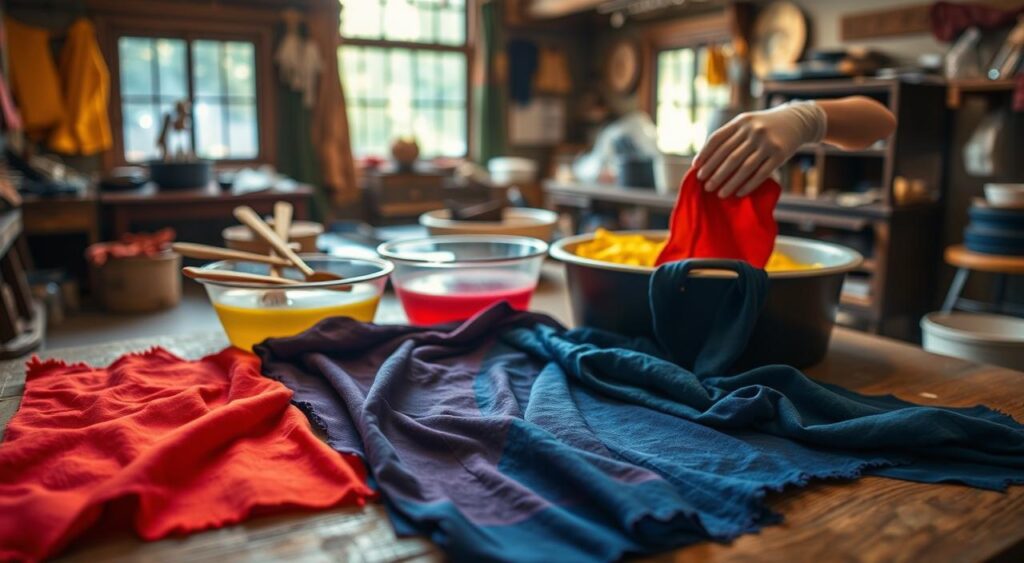
Fabric dyeing means putting colors on textiles to change how they look. Fabric dyes, derived from natural ingredients like plants and bugs, have a rich historical significance and versatility, enhancing textiles with earthy tones or restoring the vibrancy of faded clothes. Now, we use both old and new dyes for lots of color choices. Knowing the basics lets anyone get creative with fabric colors.
Why Try Fabric Dyeing?
Why get into fabric dyeing techniques? Dye techniques are a creative and eco-friendly way to upcycle old clothes. It’s green because it stops us from throwing away clothes. Turning an old outfit into something new saves money. Plus, designing your own clothes is really fulfilling. This beginners guide to fabric dyeing opens up many ways to be trendy and unique.
Choosing the Right Fabric for Dyeing
Selecting the right fabric is key when you start dyeing. Knowing the difference between natural fabrics and synthetic dyes helps a lot in your projects, especially when using plant materials for dyeing .
Natural vs. Synthetic Fabrics
Natural fabrics like cotton, linen, and wool are best for fabric dyeing at home. Using natural ingredients in eco-friendly fabric dyeing can create vivid colors from common plants, fruits, and vegetables, including natural dyes from various sourc . Cellulose fibers, such as cotton, rayon, tencel, and linen, are particularly suitable for dyeing because they soak up dye molecules well and give bright, even colors. Synthetic fabrics, such as polyester and nylon, are trickier. They often need special dyes and techniques for good results.
Common Fabrics for Dyeing
Some fabrics are great for dyeing because of their natural makeup. Fabrics dyed with natural ingredients from plants, fruits, and vegetables produce beautiful, muted earthy tones.
This guide will help you pick:
| Fabric Type | Composition | Best Usage |
| Cotton | 100% Natural Fiber | Great for beginners. Ideal for easy fabric dyeing methods like tie-dye. |
| Linen | Natural Fiber from Flax Plant | Produces crisp, bright colors. Great for sophisticated projects. |
| Wool | Animal Fiber | Works well with acid dyes. Perfect for deep, saturated hues. |
| Silk | Natural Protein Fiber | Ideal for vibrant and luxurious designs. |
| Rayon | Semi-Synthetic Fiber | Emulates natural fibers, making it versatile. |
Test Swatches: A Must-Do
Doing test swatches is important for your dyeing project’s success. This step shows how your fabric reacts to the dye. It helps avoid surprises and makes sure your fabric dyeing at home goes as planned. Just dye a small piece of fabric and see the results before you dye all of it.
Using test swatches ensures your fabric is safe and the colors meet your expectations. It helps you succeed in all your easy fabric dyeing methods.
Essential Fabric Dyeing Supplies
Starting your first fabric dyeing project? Getting the right supplies is key. Knowing what you need helps avoid mistakes. We’ll talk about what dyes to use, essential tools, and safety gear. This will help beginners stay on track.
Types of Dyes: An Overview
Dye type matters a lot in fabric dyeing. Dyes work by interacting at a molecular level with fabric fibers, ensuring permanent and vibrant colors. Natural dyes come from plants and bugs. They’re good for the planet but not always bright. Natural dye is sustainable and eco-friendly, derived from organic sources like kitchen scraps, and enhances the beauty of fabrics while being mindful of ecological impacts. Chemical dyes, like acid and fiber-reactive dyes, pop more than synthetic dyes, offering brilliant options for vibrant projects. They work well for different materials, making beginner projects shine. Direct dyeing is a straightforward method for dyeing cellulose fibers like cotton, allowing for vibrant, solid colors to be achieved quickly and economically.
| Type of Dye | Suitability | Pros | Cons |
| Natural Dyes | Cotton, wool, silk | Eco-friendly, gentle on fabrics | Colors may be less vibrant |
| Acid Dyes | Wool, silk, nylon | Vibrant colors, strong adhesion | Requires careful handling |
| Fiber-Reactive Dyes | Cotton, linen, rayon | Bright colors, permanent hold | May require fixatives |
Tools You’ll Need
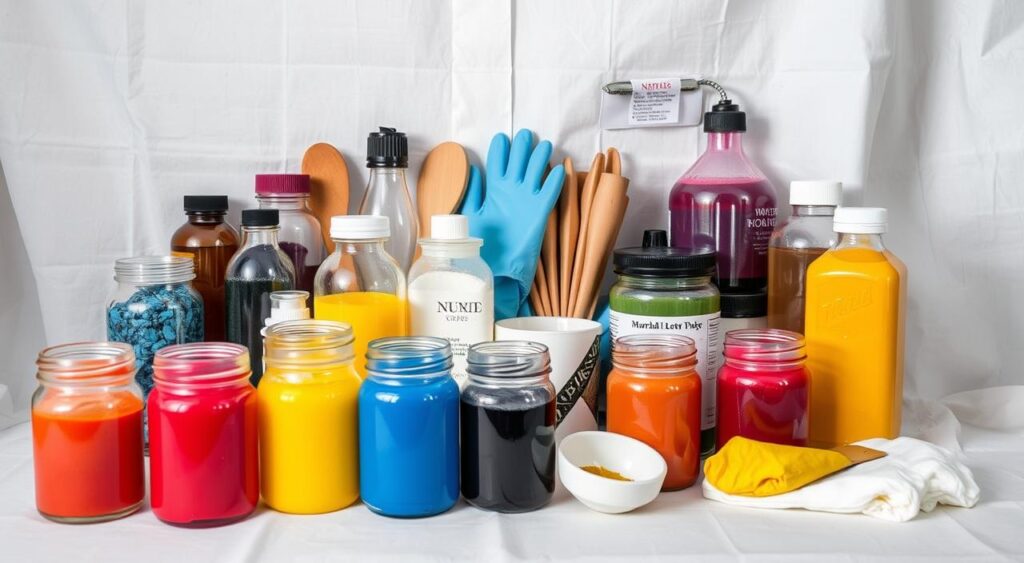
Aside from dye, you’ll need some tools. Fabric dyeing can be done without a sewing machine, making it an accessible and budget-friendly project. Make sure to have containers for dye solution and dye baths. It is important to wear rubber gloves to protect your hands during the dyeing process. You’ll also need spoons or sticks to stir, and something to measure the dye. These tips make dyeing fabric easier and more fun for beginners.
Safety Gear Recommendations
It’s important to stay safe while dyeing. Always wear gloves to keep your skin safe. Working in a well-ventilated area is crucial to avoid inhaling harmful fumes. Wearing an apron protects your clothes. A mask helps you avoid breathing in dye particles. Following these safety tips, including using citric acid for setting colors, makes your dyeing project safer, better for the environment, and a step away from fast fashion.
Basic Fabric Dyeing Techniques
Dive into basic fabric dyeing techniques to transform your clothing and textiles. Resist dyeing is a classic technique used in textile dyeing to create patterns by preventing dye from saturating the entire fabric. They’re for everyone, from hobbyists to beginners. Love tie-dye or ombre? These methods unlock endless DIY possibilities.
Tie-Dye: A Fun and Easy Method
Tie dyeing is a fun and creative method for dyeing fabric. Removing excess water from the fabric before dyeing is crucial as it ensures the fabric remains damp, facilitating an even absorption of dye. It results in colorful patterns that are unique and vibrant. It involves twisting and folding the fabric, then securing it with rubber bands. Apply dye afterward. Each result is unpredictable, making your creation special.
Ombre Dyeing: A Professional Look
Ombre dyeing gives a light-to-dark color effect. It’s great for a chic, modern look. Dip the fabric in dye and adjust for seamless transitions. It adds a professional touch to your projects.
Squeegee Technique: Getting Creative
The squeegee technique adds creativity to fabric dyeing. It is one of many other methods available for fabric dyeing, each offering unique results. Use a squeegee to spread dye, creating bold patterns. It’s great for beginners to try different colors and designs. It makes your work stand out.
Preparing Your Fabric for Dyeing
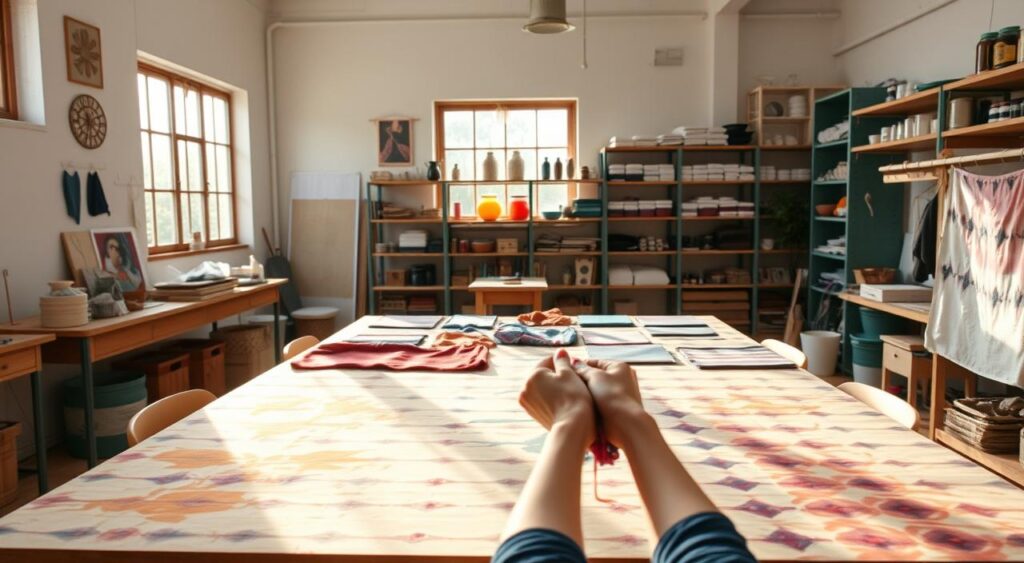
Getting your fabric ready is super important in the dyeing process. If you don’t prep right, the dye might not stick well. You won’t get the colors you’re hoping for. We’ll look at the must-do steps to get your fabric set before starting your fabric dyeing at home adventure.
Washing and Prepping the Fabric
First up, pre wash your fabric to get rid of dirt, oils, or anything else on it. Stick to a gentle detergent and skip the fabric softener. It messes with the dye sticking to the fabric. This pre wash helps the fabric absorb dye more effectively by starting with a wet cloth, leading to a more uniform dye penetration compared to dry fabric. So, your easy fabric dyeing methods work better.
Choosing the Right Water Temperature
The water temperature is key for getting the dye to stick right. Use hot water for natural fabrics like cotton or linen. It opens up the fibers for the dye. Synthetic fabrics like polyester need warm water for the dye to soak in well. Here’s a table showing the best water temperatures for different fabrics, to help with fabric dyeing at home.
| Fabric Type | Optimal Water Temperature |
| Cotton | Hot |
| Linen | Hot |
| Silk | Warm |
| Polyester | Warm |
Setting Up Your Work Space
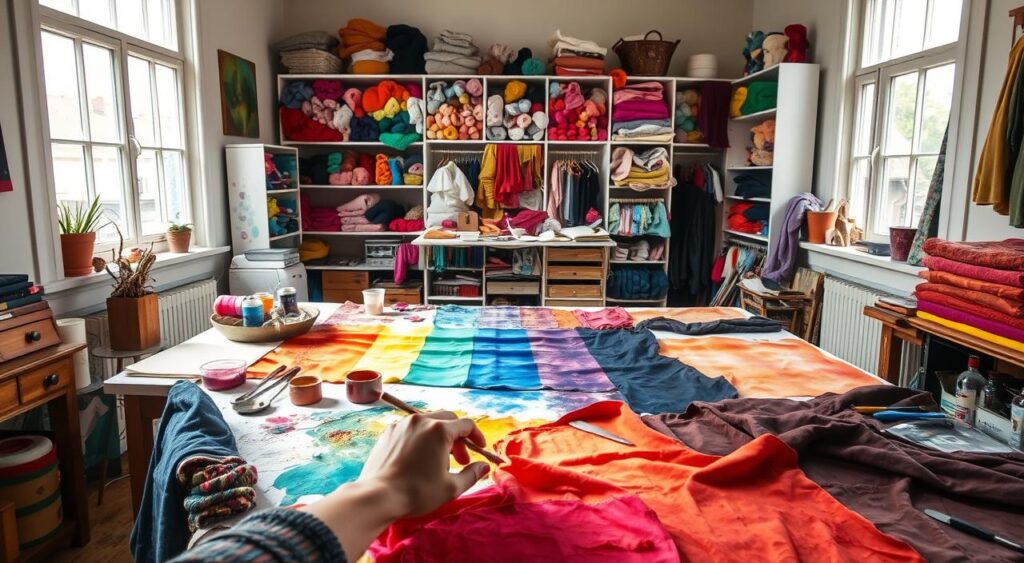
Having a neat space to work in is crucial for fabric dyeing at home. Pick a spot that has lots of air and cover everything with plastic or old newspapers. It keeps dye off your stuff. Having a dye pot for immersion dyeing is important to achieve consistent color saturation. Have everything you need, like dye bowls, gloves, and aprons, close by. A well-planned space makes your easy fabric dyeing methods easier to do.
Dye Bath Techniques
Dye bath techniques are a cornerstone of the fabric dyeing process, offering a versatile way to achieve a spectrum of colors and patterns. Whether you’re aiming for the vibrant swirls of tie dye or the delicate hues of ice dyeing, these methods allow for endless creativity.
Dyeing Techniques for Beginners
Starting your fabric dyeing journey? It’s key to learn some basic fabric dyeing techniques. This beginners guide to fabric dyeing shows easy and loved methods for novices, perfect for transforming old t shirts into stylish new pie .
Step-by-Step Guide to Tie-Dye
Tie-dye makes fabric look bright and cool. You’ll need dye, rubber bands, and a plastic area to work.
- Pick a clean, white cotton shirt or another piece of fabric.
- Twist or fold it in different manners and use rubber bands to keep the shapes.
- Mix your dyes as the package suggests.
- Put dyes on separate parts of the cloth. Precision isn’t key – tie-dye thrives on surprise.
- For an alternative method, try ice dyeing. Place ice on top of the fabric and sprinkle fiber-reactive dye over it. As the ice melts, the dye will flow onto the fabric, creating unique, organic patterns.
- Follow the sitting time, then rinse and wash to see your design.
Try various folds and dye shades for many unique results.
Simple Stamping with Fabric Paint
Fabric stamping turns plain cloth into beautiful art.
- Choose your fabric paint and desired stamp shapes.
- Spread your fabric flat.
- Press a paint-coated stamp on the fabric.
- Wait for the paint to dry fully before touching.
This approach is perfect for making patterns and customizing items like tote bags or pillowcases.
Using Batik for Unique Patterns
Batik is an age-old technique that uses wax resists for intricate designs.
- Sketch your design on the fabric with a pencil.
- Apply hot wax with a tjanting tool on the lines to create intricate patterns that resist dye.
- After the wax dries, dye the cloth your favorite colors.
- Remove the wax by ironing the fabric between paper towels.
This technique creates detailed patterns. It’s both educational and artistic.
Jumping into these fabric dyeing techniques is great for beginners eager to join the colorful world of fabric art.
Fixing and Setting the Dye
It’s important to keep your fabric bright and colorful after dyeing. Making sure the dye sticks well prevents it from fading or bleeding when washed. This makes your hand-dyed projects last longer, especially when using different fabric dyeing techniques .
Importance of Setting Dye
Setting the dye helps keep your fabrics’ colors strong. After rinsing dyed fabric thoroughly to remove any excess dye, it is important to air dry the fabric to maintain color vibrancy and prevent color bleeding. Rinsing thoroughly to remove any excess dye is crucial to prevent unwanted bleeding during future washes and achieve desired colorfastness. Knowing how much dye to use is crucial for achieving the desired color intensity. If you don’t set the dye properly, you might lose those vibrant colors in a few washes. Beginners in fabric dyeing should pay extra attention to this step to avoid disappointment and help create intricate patterns.
Methods to Fix Your Dye Choices
Each dye needs a specific method to make sure it sticks to the fabric for good.
Here are some good ways to do it:
- Heat Setting: Works well for most dyes, especially natural ones. You can use an iron on the right heat setting or use a hot dryer.
- Chemical Fixatives: Good for acrylic and some fiber-reactive dyes. Companies like Dharma Trading Co. have high-quality products.
- Steam Setting: Best for silk and wool. Wrap the fabric and steam it to secure the colors.
Common Mistakes to Avoid
Mistakes can slip in even when you’re careful.
Here are some to watch out for:
- Uneven Application: Make sure to immerse the fabric fully and brush evenly to prevent blotches.
- Incorrect Mixing: Follow the dye instructions carefully. Wrongly mixed chemicals can spoil your work.
- Skipping the Fixing Step: Take your time to let the dye set well. It’s a crucial step not to be missed.
Caring for Dyed Fabrics
After dyeing your fabrics at home, knowing how to care for them is key. This helps keep the colors bright, especially for projects using fabric scraps . Your hard work will stay beautiful for a longer time.
Washing Your Dyed Fabrics
For washing dyed items, use cold water and a gentle wash cycle. The fashion industry has a significant environmental impact, particularly due to the harmful effects of dyeing processes. Air drying dyed fabrics is crucial to ensure the longevity and vibrancy of the colors. Pick mild detergents and skip the bleach to keep the dye intact. When drying, hang them outside but not in direct sun. You can also dry them on a low heat setting if needed.
Maintaining Vibrancy Over Time
To keep the colors of your fabrics bright, add white vinegar to the rinse cycle. This acts like a color fixative. Don’t use fabric softeners; they can dull the color. Also, washing dyed items inside out helps protect the color.
Storing Your Creations
Storing dyed fabrics correctly is important for keeping them looking good. Keep them in a cool, dry spot away from the sun. Make sure dyed clothes are dry before storing to avoid mildew.
Use breathable containers for storage, not plastic ones. This keeps the air moving and helps maintain the fabric’s quality and color.
By following these care tips, your home-dyed fabrics will keep looking bright and beautiful. Your hard work will pay off, showing in every vibrant piece you create.
Inspiration and Ideas for Projects
Fabric dyeing projects can make your clothes and home feel new. If you are new or skilled in crafting, many simple methods are there to try. These ways offer a fun chance to update old outfits or make special gifts. By mixing techniques, you can create one-of-a-kind and imaginative pieces, perfect for home decor or gifting . It makes every project a chance to show your artistic side.
Upcycling Old Clothes
Turning old jeans and shirts into something new is a great project for starters. Embracing sustainable practices in upcycling not only extends the lifespan of garments but also reduces demand for fast fashion and minimizes textile waste, promoting a sustainable and eco-friendly fashion cycle. Don’t throw away old pieces. Instead, add some color and patterns to them. Using tie-dye or squeegee dyeing can make old fabrics look new again, especially when prepared in a dye bath. Try new colors and patterns to refresh your wardrobe.
Unique Gift Ideas with Dyed Fabrics
Dyed fabrics are perfect for making thoughtful and unique gifts. You can make scarves, tote bags, or pillowcases with a personal touch. With simple methods like ombre or the traditional tie dye technique, you can make beautiful and useful items. These gifts show your creativity and the effort you’ve put into them.
Getting Creative with Various Techniques
Combining different techniques can create amazing effects. You could mix tie-dye with stamping for a unique fabric. Or, blend ombre with batik for a refined look. The important part is to keep trying new things, like ice dyeing and other innovative method . Let your creativity shine. These projects are about enjoying making something that’s truly yours.
FAQ
How do I prepare my fabric for dyeing?
Wash the fabric first to get rid of dirt. Choose the right water temperature and set up a good workspace. This helps the dye stick better and last longer.
Can you describe some basic fabric dyeing techniques?
Try tie-dye for fun patterns, ombre for gradients, and squeegee for unique designs. These techniques range from playful to elegant.
How do I set the dye to ensure it doesn’t fade?
Use a fixative or heat setting to lock in the color. This keeps your dyed fabric bright and prevents color from running.
What are common fabric dyeing mistakes to avoid?
Watch out for uneven dye and mixing chemicals wrong. This improves your project’s look and your happiness with it.
How should I wash and care for my dyed fabrics to maintain their color?
Wash in cold water with gentle softeners. Avoid hot places and find good storage to keep the color from fading.
What are some inspiration ideas for fabric dyeing projects?
Refresh old jeans and t-shirts or make dyed scarves and linens as gifts. Playing with techniques brings new and creative fabric projects.