



Starting a support group for caregivers in your neighborhood can really make a difference in creating a strong support system. You share duties and advice. This creates a support network that helps everyone involved, especially those caring for an aging parent, by addressing the emotional and practical challenges they face. This guide shows you how to set up a collective. It gives you tools and tips for caregiving. By working together, you can lessen the tough parts of caregiving. This ensures everyone gets the help they need.
Key Takeaways
- Caregiver collectives help in sharing tasks and tips.
- Building a support network enhances caregiving effectiveness.
- Community support can ease caregiving challenges.
- Access to shared caregiver resources is beneficial.
- Creating a collective nurtures a supportive environment.
Understanding the Role of Caregivers
The importance of caregivers is huge in our society. They are crucial for the well-being and daily lives of many, including family caregivers who care for both kids and the elderly. A family member often takes on the role of caregiver, highlighting the familial obligations and emotional connections that shape these caregiving dynamics. They do more than just tend to physical needs. They also provide emotional and psychological support, which is very important for families and communities.
What Do Caregivers Do?
Caregivers do many things to help those they look after, which are part of their caregiving responsibilities . They handle medications, help with moving around, keep track of doctor visits, and offer company. In short, they are key to personal care.
Different Types of Caregiving
There are many kinds of caregiving, each with its own set of challenges and rewards. Physical caregivers help with everyday tasks, while emotional caregivers offer support and access to mental health resources. There’s also specialized caregiving for people with certain conditions, like dementia caregivers who focus on those affected by dementia. Knowing about these roles helps create a strong caregiver network.
The Importance of Community Support
A strong local caregiver community is very important. It helps caregivers stay strong and work efficiently. Support can come from local groups, online forums, and neighborhood teams. This support eases the physical and emotional load on caregivers. It improves life for them and those they look after, particularly older adults who benefit from this support . This way, we build a healthier, more connected society.
The Benefits of Support Groups for Caregivers
Support groups help caregivers greatly, making their lives better. In these groups, people meet, share helpful tips, and feel less alone. Being a caregiver can be tough, but finding folks who get what you’re going through, including other caregivers, helps a lot.
Emotional Support and Connection
It’s very important to feel like you’re not alone. In caregiver support groups, you can find this kind of support. Sharing experiences and feelings within these groups can significantly alleviate feelings of isolation. These groups bring people together, letting them share both hard times and good ones. This can make everyone feel better and less stressed, especially when active listening is practiced.
Resource Sharing and Collaboration
Caregiver groups are great for swapping tips and advice. Everyone can share what’s worked for them. This helps everyone learn new ways to care for their loved ones, emphasizing the need for effective communication. Sharing this knowledge means everyone gets the help they need while navigating challenges in caregiving.
Reducing Caregiver Isolation
Being a caregiver can feel lonely, but support groups can change that. These groups introduce you to others who understand. They provide a sense of belonging and support. This makes caregivers feel part of a bigger group that cares, fostering personal connections .
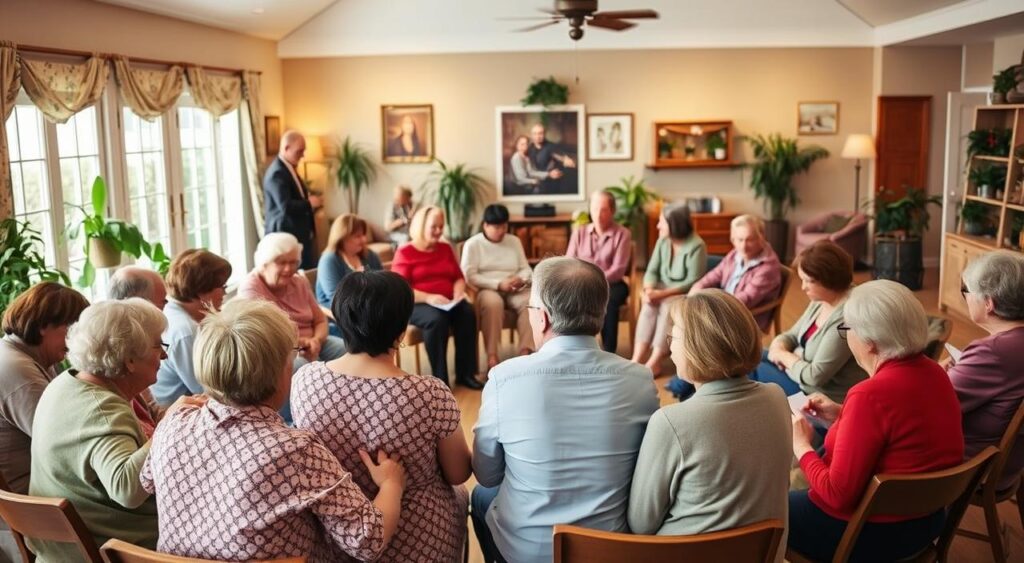
How to Start a Neighborhood Caregiver Support Group
Starting a support group for caregivers in your area is rewarding. It helps create an essential network for sharing and support, enriching the caregiving experience . Follow this guide to begin.
Identifying Interested Participants
First, talk to friends, family, and others you know who are caregivers. Post on social media like Facebook and Nextdoor about your group idea. You can also ask local community centers and healthcare providers for help in finding members. Aim to find a mixed group of caregivers for varied views and advice, ensuring diverse perspectives are included. Understanding the group’s dynamics, including how it operates and the diverse backgrounds of its members, can enhance the overall experience by fostering trust and deeper engagement.
Choosing a Suitable Location
Finding a good space for meetings is key to your group’s success. Look at local libraries, community centers, or a group member’s home, and consider venues that might attract healthcare professionals . The place should have enough seats, bathrooms, and parking. A welcoming and easy-to-reach location helps keep people coming back and makes meetings comfortable.
Setting a Regular Meeting Schedule
It’s important to meet regularly to build commitment. Start with monthly or twice a month meetings when most people can come. Tools like Doodle or Google Calendar can help pick times. Meeting regularly builds trust and keeps the group strong, which is vital for self care among caregivers .
These steps will help you start and keep up neighborhood caregiver support groups. A well-run caregiver network can greatly help those who care for others.
Creating a Welcoming Environment
Making your group welcoming is crucial for the success of caregiver support. It’s important to create a space where everyone feels important, understood, and safe.
Establishing Ground Rules
It is key to set clear rules and expectations early on. Ground rules keep order and make sure everyone agrees. These can cover respecting privacy, letting everyone speak, and being on time.
By laying down these rules, your group will stay respectful and effective for all members.
Encouraging Open Communication
Open talk is essential for caregiver support groups. Urge members to share their stories, thoughts, and worries. This can be achieved through empathetic listening, understanding, and regular meetings.
Offering many ways to communicate, like group sessions, online platforms, and personal talks, ensures everyone’s voice is heard within the healthcare system .
Celebrating Achievements Together
It’s great to celebrate wins, big or small, to keep spirits high and strengthen community bonds. Acknowledging someone’s progress, such as a caregiving challenge overcome, boosts unity and positivity and provides coping strategies .
Ways to celebrate include sharing victories at meetings, posting success in group chats, or having small gatherings.
Organizing Resources and Educational Materials
Making sure resources and materials are well-organized is key for your support groups for caregivers. It’s about finding useful workshops, sharing great online tools, and putting together guides that help a lot, especially for care recipients .
Finding Relevant Workshops and Experts
Workshops with experts are super valuable. You can invite nurses, therapists, or social workers. They provide training that meets caregivers’ needs, especially in managing caregiving duties.
Such workshops offer helpful tips and boost confidence and skill levels in support groups for caregivers.
Sharing Useful Online Tools
Many digital tools are there to help caregivers. Give them access to apps for managing medications, scheduling, and making task lists. Sharing these tools makes daily routines smoother and more efficient.
Check out this table for some handy tools:
| Tool Name | Primary Function | Key Features |
| ElderCheckNow | Medication Management | Reminders, Dosage Tracking |
| CareZone | Scheduling & Notes | Calendar Sync, Note Sharing |
| Medisafe | Medication Adherence | Alerts, Family Sharing |
Compiling Helpful Published Guides
Gathering guides for caregivers creates a trusted library. Look for books from trusted sources like the Alzheimer’s Association or AARP. These caregiver resources are a big help for all group members.
Activities to Foster Connection Among Caregivers
Engaging activities can make neighborhood caregiver support groups stronger and more effective. They bring people together, lower stress, and share valuable resources.
Group Discussions and Check-ins
Regular talks and check-ins are crucial for a local caregiver community. Sharing the positive aspects of caregiving during these discussions can highlight the benefits and uplift the group. They let caregivers exchange stories, offer advice, and talk about struggles and victories. This peer support can lessen the feeling of being alone.
Guest Speakers and Training Sessions
Bringing in guest speakers and holding training sessions can teach neighborhood caregiver support groups a lot. Health, mental well-being, and elder care professionals can provide useful tips and techniques to nurture emotional well-being among caregivers. This expands the group’s collective knowledge.
Potluck Gatherings and Social Events
Hosting potluck meals and social gatherings is a fun way to build connections in the local caregiver community. Sharing food and fun activities offers a break from caregiving. It also helps caregivers form closer ties.
Adding these activities helps neighborhood caregiver support groups form a more close-knit community. It gives crucial emotional and practical support to everyone.
Tips for Managing Group Dynamics
Handling group dynamics well is key to a smooth caregiver network. It makes sure everyone feels seen and important. This helps create a place where support and teamwork grow.
Here are ways to help group members work well together.
Encouraging Participation
Getting everyone involved is central to a caregiver group’s success. Begin meetings with a warm welcome so all are ready to share. Use activities like round-robin sharing or break-out discussions. This lets everyone have a chance to talk. Encourage collaborative problem solving by forming small support circles where caregivers can share their experiences and brainstorm solutions together.
Handling Conflict Constructively
Conflicts happen, but dealing with them positively is important. Promote open talking and calmly tackle disagreements early. Techniques like reflective listening and seeking common goals can smooth out conflicts. Make sure everyone’s opinions are considered. This makes each member feel valued.
Addressing Diverse Needs Within the Group
Different backgrounds mean different needs in caregiver groups. Respect these caregiving relationships by using various meeting styles and support types. Adjust activities to fit everyone’s likes and needs. This ensures everyone feels included and fully supported.
| Strategy | Description | Outcome |
| Encouraging Participation | Use inclusive activities to ensure all voices are heard | Boosts engagement and sense of community |
| Handling Conflict Constructively | Employ techniques like reflective listening and common ground finding | Resolves disputes and fosters a positive atmosphere |
| Addressing Diverse Needs | Adapt activities to meet various preferences and requirements | Ensures inclusivity and comprehensive support |
Inviting Professional Support and Guidance
Getting help from professionals can make your caregiver group much better. Working with local agencies, having professionals lead your meetings, and using mental health resources can build strong support for everyone.
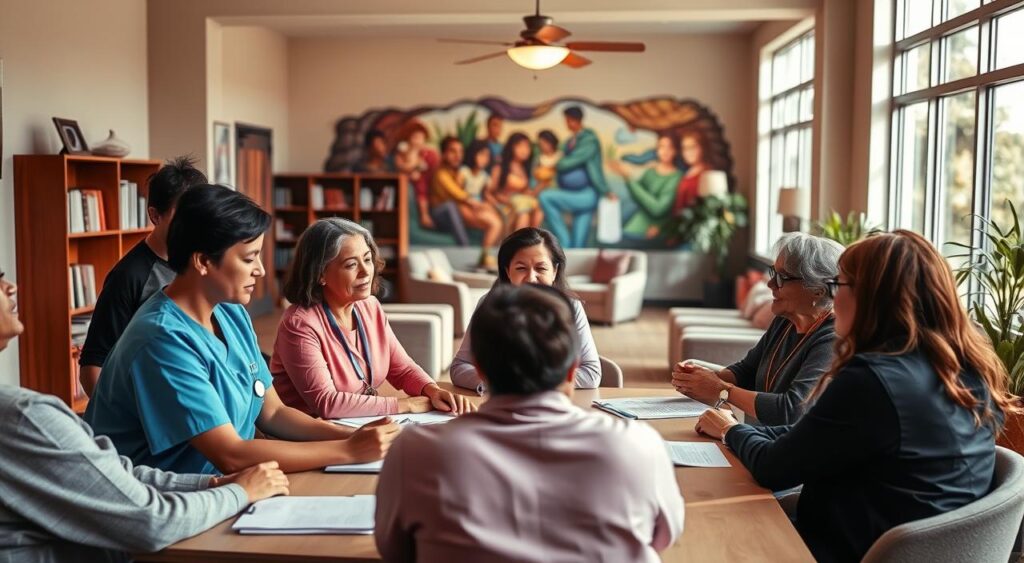
Collaborating with Local Agencies
Working with local agencies gives you important caregiver resources. These places know a lot about informal caregiving, caring for the elderly, mental health, and more. Making official connections helps your group use these resources well.
Hosting Professional Facilitators
Having experts lead your meetings can make things run smoothly. They know how to handle discussions, solve problems, and give special training. Their know-how makes dealing with the tough parts of caregiving easier, by offering valuable insights and emotional support.
Accessing Mental Health Resources
Adding mental health help to your group is key. Working together with therapists or counselors offers sessions on handling stress and staying emotionally healthy by understanding the care recipient’s condition and related health issues. This makes sure everyone can get the mental support they need, making your caregiving community stronger.
Promoting Your Caregiver Collective
Building a thriving local caregiver community is crucial. To do this, effectively spreading the word is key. Here are essential strategies to help promote your neighborhood caregiver support groups, including leveraging an online community :
Utilizing Social Media
Social media can reach lots of people quickly. Make a special Facebook page or group for this. Also, use Instagram and Twitter to share news and stories about your groups. Keep posting content that caregivers will find useful, like tips, events, and stories from members facing similar challenges.
Creating Flyers and Community Boards
Flyers make a big difference in getting the word out locally. Create attractive flyers with all the necessary info about your meetings, emphasizing the importance of balancing caregiving responsibilities with one’s own well-being. Then, put them in places like libraries, community centers, and shops. Use community bulletin boards too, for announcements and to find new members.
Partnering with Local Organizations
Working with local groups can make your collective more trusted and widen your circle. Team up with places like hospitals, churches, and community services to share about your caregiver group. These partnerships can bring in helpful resources and more people.
To sum up, using a mix of social media, flyers, and partnerships with local groups is key. This strategy will help make your neighborhood caregiver support groups well-known and supported. With these efforts, you can build a strong and caring local caregiver community.
| Promotion Strategy | Key Actions | Benefits |
| Utilizing Social Media | Create profiles, post regularly, share stories | Wide reach, instant updates |
| Creating Flyers and Community Boards | Design flyers, distribute, use bulletin boards | Local awareness, attract nearby participants |
| Partnering with Local Organizations | Collaborate with healthcare and social services | Enhanced credibility, resource sharing |
Evaluating the Effectiveness of Your Group
It’s important to check how well your support groups for caregivers are doing. This ensures the group helps its members effectively. Regular check-ins keep your caregiver network strong, supportive, and full of resources.
Setting Goals and Objectives
Start by making clear goals for your group. Mix short-term and long-term goals to give direction and purpose. Goals should be specific, measurable, achievable, relevant, and have a deadline (SMART). This makes it clear what the group aims for and helps in tracking success. Shared goals foster mutual understanding, which encourages empathy and collaboration among group members.
Conducting Feedback Surveys
Getting feedback from members is key. Use surveys to find out what’s good and what’s not, especially focusing on the needs of the care recipient. Ask about how often you meet, the resources shared, and how the group feels. Regular surveys give you fresh insights to keep the group helpful and active.
Adjusting Activities Based on Feedback
Acting on feedback is crucial. Change your activities, resources, and how you meet based on what members say, especially considering the unique challenges faced by caregivers of individuals with chronic illness. This shows you value their opinions and are ready to adapt to their needs.
Sustaining Long-term Engagement in Your Support Group
To keep your caregiver support group going strong, use key strategies. It’s important to recognize members’ efforts, plan who will lead next, and look for funding and grants. These steps help keep the group active and united.
Recognizing and Valuing Contributions
Acknowledging the efforts of group members boosts morale. Recognize their role in providing emotional support by saying thanks during meetings or in newsletters. You could also host small events to show your gratitude. Doing this keeps everyone motivated and involved.
Planning for Leadership Succession
It’s smart to think about who will lead the group in the future. Start training potential leaders early by offering them chances to learn and grow. This ensures your group keeps running smoothly, even when leaders change, while maintaining confidentiality and protecting personal details shared within the group.
Exploring Funding and Grant Opportunities
Finding funds is crucial for keeping your group’s activities going. Look for grants that fit caregiver groups to help pay for events and training. Leverage local resources, such as local organizations and government programs, to find support. Aim to set up a team that focuses on managing these funds to secure your group’s future.
FAQ
What Do Caregivers Do?
Caregivers help with personal care, medical needs, emotional support, and everyday tasks. This support goes to those who are aging, sick, or have disabilities, often sharing practical advice on effective strategies for managing caregiving tasks and emotional challenges.
What Are the Different Types of Caregiving?
There are a few kinds: family members who provide care, professional caregivers, and community help. Community help includes neighbors supporting each other through networks, as well as the role of the primary caregiver in providing support.
Why Is Community Support Important for Caregivers?
Community support gives caregivers emotional backing and resources. It also creates a feeling of belonging and support among them, especially for those who provide care for one family member at a time.
What Are the Benefits of Support Groups for Caregivers?
Support groups provide emotional care, share resources, and make connections. Regular group meetings greatly reduce feelings of being alone and overwhelmed.
How Can a Caregiver Support Group Reduce Isolation?
Through regular meetings and social events, caregivers can form bonds, share stories, and feel part of a community. Engaging in informal care fosters connections and reduces the loneliness often felt in caregiving.
How Do I Start a Neighborhood Caregiver Support Group?
Find people who are interested, choose a place to meet, and set a schedule. Alternatively, consider online support groups on platforms like Duet and Facebook, which offer resources, connection, and shared experiences for caregivers dealing with challenges like Alzheimer’s and Dementia. This creates a well-organized support circle.
What Steps Can Ensure a Welcoming Environment in a Support Group?
Make some basic rules, promote open talks, and celebrate everyone’s successes. This helps make a welcoming and caring space for everyone, and organizations like the Family Caregiver Alliance play a crucial role in supporting caregivers by providing resources and community support.
How Can We Share Resources and Educational Materials in Our Group?
Look for workshops, experts, online tools, and guides. Spending quality time with family members, especially children, can provide emotional support and create a positive ripple effect on the caregiver’s overall well-being and the quality of care they provide. Everyone can get valuable information and help they need.
What Activities Foster Connection Among Caregivers?
Hold group talks, invite speakers, and have social events like potlucks. These activities bring caregivers together, build a supportive community, and provide opportunities to share new resources and updated information.
How Do We Manage Group Dynamics Effectively?
Welcome everyone’s participation, solve conflicts in a positive way, and meet different needs. By incorporating a local support group, you can create a space for local gatherings where members can connect, share experiences, and find emotional support. This ensures a peaceful and effective group.
How Can Professional Support Enhance Our Caregiver Group?
Work with local services, have professional leaders, and use mental health resources. This offers extra help and advice to members caring for an older family member.
How Do We Promote Our Caregiver Collective?
Use social media, make flyers, and work with local groups. This gets the word out and brings more people to join, helping to address caregiver stress by highlighting the emotional and physical tolls of caregiving and the importance of seeking professional support and utilizing resources like therapy and support groups.
How Do We Evaluate the Effectiveness of Our Group?
Create goals, ask for feedback, and change activities based on what people say. This helps make your group better and more helpful.
What Strategies Can Sustain Long-term Engagement in Our Support Group?
Appreciate everyone’s efforts, plan for future leaders, and look for funding. Engaging with local support groups can also provide continuous support, helping your group last and stay successful.