


As you get older, it’s key to keep up with a fitness program and routine. This helps with your overall health. Following senior exercise guidelines ensures you stay active in a safe way. Starting to exercise helps avoid falls, builds strength, and makes your balance better. Even simple exercises like walking or doing light aerobics, along with lifting some weight, can be really good for you.
The American Heart Association says doing 150 minutes of medium-level aerobic exercises every week is great. These exercises make you stronger, more flexible, and help you keep your balance. Incorporating gentle stretching as part of your warm-up and cool-down routine can enhance flexibility and reduce stiffness. These aging and fitness tips can make growing old smoother and let you live independently longer, offering numerous health benefits.
Key Takeaways
- Follow senior exercise guidelines to stay active and healthy.
- Aim for 150 minutes of moderate aerobic activity per week.
- Combine simple activities like walking with strength training.
- Exercise can prevent falls and improve balance.
- Stay committed to a fitness routine for optimal aging and fitness.
Understanding the Importance of Senior Fitness
Staying active helps seniors keep up their overall well-being and independence. Staying active also enhances cognitive function, which is crucial for maintaining mental health as we age. Being physically active enhances both physical and mental health. By adding senior fitness tips to your daily life, you’ll enjoy a healthier lifestyle and better life in your golden years.
Benefits of Regular Exercise for Seniors
Exercise is great for senior health. It keeps muscle strength and bones dense, fighting off osteoporosis. Also, it boosts heart health, makes daily tasks easier, and lifts energy levels.
Effects on Mental Health
Exercise does wonders for the mind too. Regular exercise enhances cognitive health, particularly for seniors, by reducing the risk of cognitive decline and diseases like Alzheimer’s. Seniors active in exercise tend to feel less depressed and anxious. It’s because physical activity releases endorphins, which brighten your mood and enhance balance, sharpening the mind.
Reducing the Risk of Chronic Diseases
Keeping active is key in fighting chronic diseases. Regular exercise also plays a crucial role in fall prevention by enhancing balance and stability. Exercise can ward off diabetes, heart disease, and high blood pressure. Following senior fitness tips can improve balance and coordination too, lowering the chances of falls and reducing joint pain.
Assessing Your Current Fitness Level
Before you start a new exercise program, especially elderly workout routines, you should consult a healthcare provider to check your fitness level. This helps pick the right exercises that fit your skill level and ensures you get senior exercise benefits safely.
Consulting with a Healthcare Provider
Talking to a healthcare provider is a key first step. It is important to consider individual health conditions when consulting a healthcare provider. They check your health, talk about any health issues, and suggest elderly workout routines that are good for you. They also help change your exercise program to meet your needs, making sure you get the most from senior exercise benefits.
Self-Assessment Techniques
You can also check your own fitness level. You might look at your heart rate after moving around, see if day to day activities are easy, or use apps made for seniors. Knowing what you can do helps make a workout that’s safe and works well for you.
Understanding Your Limitations
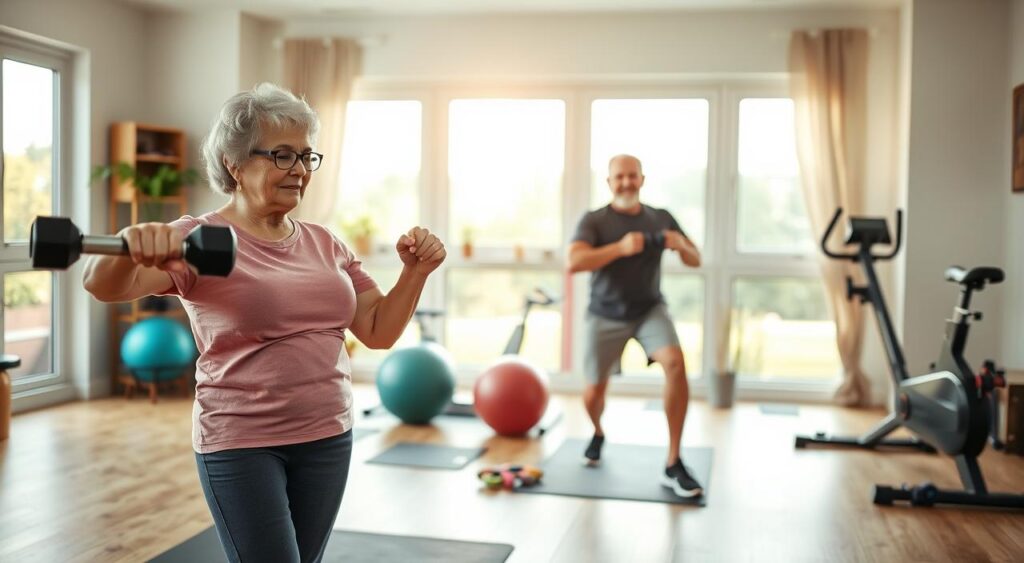
Knowing your limits is crucial when starting a fitness plan. Doing too much can cause injuries. So, it’s important to choose activities that are just right for you. Changing your elderly workout routines to meet your limits helps you enjoy senior exercise benefits safely. Always pay attention to how you feel and be ready to adjust or take breaks when needed.
Setting Realistic Fitness Goals
Creating fitness goals you can actually reach is key as you get older. Setting realistic fitness goals helps maintain an independent lifestyle by ensuring you stay active and mobile. It helps you keep going in your daily routine and track how well you’re doing. This makes your journey to getting fitter better.
Short-term vs. Long-term Goals
Knowing the difference between short-term and long-term goals is important. Dedicating just a few minutes to exercise can significantly enhance flexibility and overall well-being, especially for seniors. Short-term goals take a few weeks or months to reach. They motivate you right away.
Long-term goals take longer, from months to years. They are your main aim for staying healthy. Having both types ensures you keep making progress.
SMART Goals Framework
The SMART goals method is great for older adults who want to stay active. Setting SMART goals can help maintain independence by encouraging regular exercise and fostering self-reliance. It stands for Specific, Measurable, Achievable, Relevant, and Time-bound.
Here’s how to use it:
- Specific: Make your goal clear, like walking 30 minutes a day.
- Measurable: Use numbers to see your progress, like counting steps.
- Achievable: Your goal should match what you can do.
- Relevant: Your goals should match your health aims.
- Time-bound: Having a deadline helps you stay focused.
Tracking Your Progress
It’s crucial to keep an eye on your progress. Tracking your progress can also lead to better quality sleep, which contributes to an overall sense of well-being. Doing so keeps you motivated and lets you know if you need to change anything. Use logs, apps, or gadgets to track your fitness. This is very helpful for staying active as you get older.
| Goal Type | Example |
| Short-term | Add 500 steps each day for a week |
| Long-term | Join a 5K walk in 6 months |
Types of Exercises for Seniors
Regular exercise is good for people at any age, especially seniors. We’re about to look at the best exercises that are great for older adults. These include fitness basics and routines for aging well.
Cardiovascular Workouts
Keeping your heart healthy is key. Brisk walking is an excellent cardiovascular workout that can significantly improve heart health. Simple activities like walking, swimming, or biking help a lot. They’re great for making your heart stronger and boosting your energy.
Strength Training Fundamentals
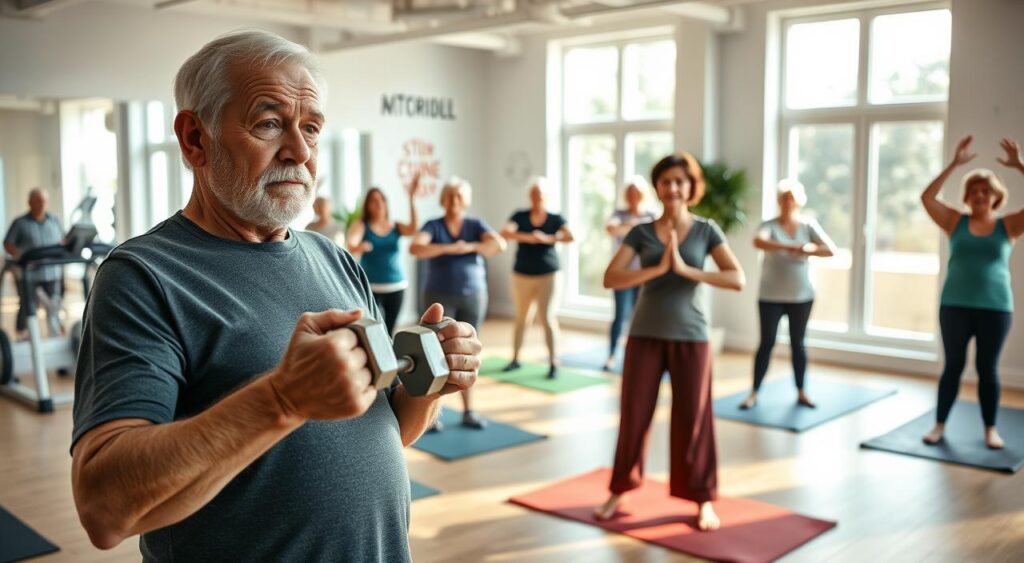
Strength exercises are super important for seniors. They help keep muscles strong and bones tough. Strength training also plays a crucial role in strengthening bones, reducing the risk of osteoporosis, and enhancing mobility and independence. Doing simple things like wall pushups or lifting light weights can make a big difference. Remember to focus on doing these exercises the right way and increase difficulty slowly to stay safe.
Flexibility and Balance Exercises
Flexibility and balance get more important as you get older. Flexibility exercises help enhance flexibility, which is crucial for reducing fall risks among older adults. They can help you stand straighter and avoid falls. Trying out stretching, yoga, or tai chi is a good idea. They make you more flexible and steady on your feet. Even standing on one foot can be a good daily practice.
| Exercise Type | Examples | Benefits |
| Cardiovascular Workouts | Walking, Swimming, Cycling | Improves Heart Health, Boosts Endurance |
| Strength Training | Wall Pushups, Light Weight Lifting | Maintains Muscle Mass, Increases Bone Density |
| Flexibility and Balance | Yoga, Tai Chi, Stretching | Improves Posture, Prevents Falls |
Creating a Safe Exercise Environment
Making sure seniors have a safe place to exercise is key to their health. Choosing a low impact cardiovascular workout is beneficial for safety, as it is gentle on the joints while improving overall cardiovascular health. Choosing suitable spots and gear helps avoid dangers. This way, workouts for the elderly are both efficient and secure.
Choosing the Right Space
Finding the right spot for exercise is important. Keeping your feet flat during exercises is crucial for improving flexibility and strength in the ankles and knees, which aids in overall mobility and balance. Pick a place without clutter to reduce tripping risks. This is crucial for elderly workouts, especially at a local fitness center.
Look for areas with enough light and air. Good lighting and ventilation make exercising more comfortable and safe.
Utilizing Proper Equipment
Right equipment boosts senior health. Use strong chairs and slip-proof mats. Right shoes and gear also help avoid injuries. Check all equipment for any damage before using it.
Avoiding Common Hazards
To avoid injuries, know the common dangers. Minimizing fall risk is crucial, so avoid common hazards like loose cords and small objects. Keep cords and small things out of the way. Use mats on hard floors to lessen impact. And drinking water helps keep you from getting dizzy or tired.
Developing a Balanced Workout Routine
Creating a balanced workout routine, or exercise regimen, is key for top senior exercise benefits. It should include a variety of exercises. This promotes overall health and well-being.
Combining Different Types of Exercises
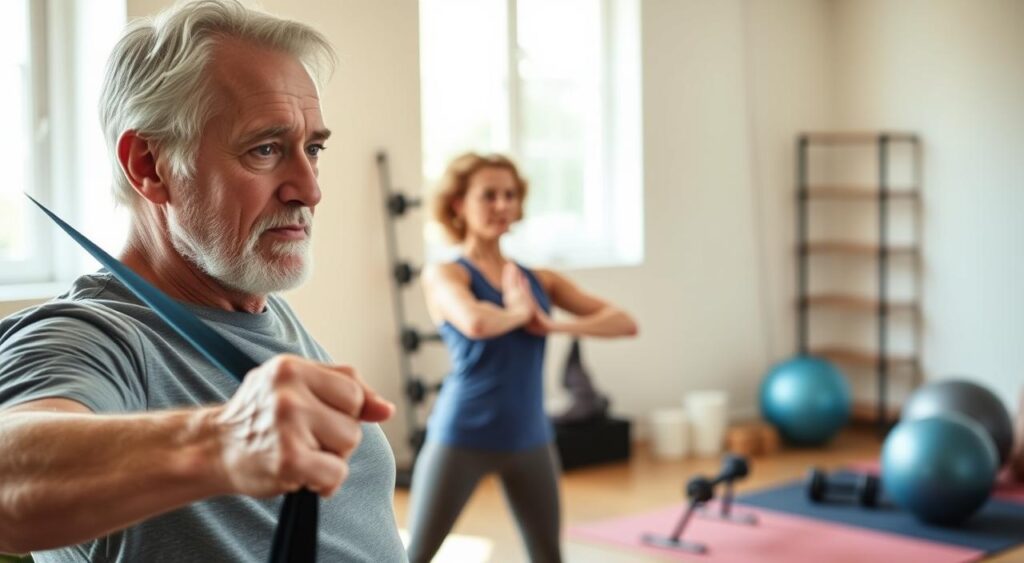
Adding different types of exercises is a top senior fitness tip. It is important to target all major muscle groups in a balanced workout routine. Mix cardiovascular activities, strength training, and flexibility exercises. Cardio exercises like walking or swimming boost heart health. Strength training, using weights or resistance bands, builds muscle and bone strength. Flexibility activities, such as yoga, aid in mobility and injury prevention.
Importance of Rest Days
Rest days are vital in any workout plan. They help muscles recover and grow. Additionally, rest days help relieve tension by allowing the body to alleviate discomfort and promote flexibility, particularly in areas like the neck, shoulders, and wrists. Skipping rest can lead to overwork and injury. It’s important to rest regularly.
Modifying Routines for Individual Needs
Adjusting your workout to your health and mobility is crucial. Modifying exercises to focus on strengthening muscles safely is essential for maintaining mobility and independence. Changes can help you exercise safely and effectively. This could mean changing workout intensity or choosing low-impact exercises. Getting advice on modifying exercises can also help. This ensures your exercise routine stays effective and enjoyable.
Tips for Staying Motivated
Staying motivated is key as you get older and want to keep active. Staying motivated in exercise also helps in reducing stress, which can improve your mood and energy levels. Following guidelines for senior exercise ensures your path to better health is fun and doable. Here are some tips to help you stay on track while doing physical activities.
Finding a Workout Buddy
Having a workout buddy can really help you stay dedicated. Exercising with someone not only makes it more fun, but it also keeps you accountable. For seniors, exercising with a buddy significantly benefits seniors’ health by providing motivation and reducing risks. It could be a family member, a friend, or a neighbor. Sharing your fitness goals with them makes it easier to keep moving.
Joining Group Classes or Community Programs
Group classes and community programs are great because they’re run by experts. Joining group classes that offer chair yoga can be particularly beneficial, as chair yoga is a low-impact form of exercise designed to improve muscle strength, mobility, balance, and flexibility, while also enhancing mental health by promoting better sleep quality and reducing depression. These settings offer support and a sense of community, which are key for motivation. Many local centers have programs just for seniors. This makes adding activities like water aerobics into your day simpler.
Celebrating Small Achievements
Celebrating your success is very important for keeping up with exercise. Recognizing improvements in athletic ability is crucial as it highlights the benefits of regular exercise, especially for seniors. It’s good to recognize even the small things, like finishing a week of workouts or learning a new move. This kind of celebration helps you stay motivated to keep being active as you age.
Nutrition for Active Seniors
Good nutrition is key to staying fit as you get older. Proper nutrition also plays a crucial role in weight loss by providing the necessary nutrients to maintain a healthy weight. It’s important to eat a balanced diet, drink plenty of water, and consider taking supplements. These steps will help you stay full of energy and improve your physical fitness. They’ll also support your health while you keep up with your workouts.
Importance of a Balanced Diet
Eating a balanced diet is very important for active seniors. Make sure to eat lots of fruits, veggies, whole grains, and lean proteins. These foods give you the nutrients you need to keep your muscles healthy, give you energy, and help you recover after exercise. Eating a mix of different foods in moderation is the best way to stay healthy and maintain your own body weight .
Hydration Guidelines
It’s very important to drink enough water, especially if you’re exercising. Proper hydration helps in maintaining good sleep quality, which is essential for overall health. Not drinking enough can make you tired and dizzy. Try to drink water throughout the day, especially before, during, and after your workout. Older adults might not feel thirsty even when they need water, so it’s a good idea to drink regularly.
Supplements to Consider
Taking supplements can be helpful, especially if you don’t get enough nutrients from your diet or have special health needs. It is important to consider individual health conditions when taking supplements to ensure they are safe and effective for your specific needs. Some good supplements for seniors include calcium, vitamin D, and omega-3 fatty acids. These can help your bones, immune system, and heart. But, make sure to talk to your doctor before adding any supplements to make sure they’re right for you.
Listening to Your Body
When you’re active in senior health and wellness, listening to your body is key. Maintaining core strength is crucial for enhancing balance and flexibility, which supports overall health and safety. This helps you tell normal aging and fitness discomfort apart from serious issues. Paying close attention to what your body tells you makes your fitness routine safer and more effective.
Recognizing Signs of Overexertion
Not spotting overexertion early can have big consequences. It is important to balance vigorous activity with adequate rest to prevent overexertion. Look out for signs like too much tiredness, feeling dizzy, or having trouble breathing more than what’s normal. Spotting these early is crucial to avoid injuries or more health problems.
Understanding Pain vs. Discomfort
It’s important to know the difference between pain and regular discomfort. Exercises that help maintain balance are crucial for physical stability and preventing falls, especially for seniors. Feeling sore after exercising is expected. But sharp, lasting pain could mean an injury. Pay careful attention to avoid making any potential problems worse.
When to Seek Medical Advice
It’s vital to know when to get advice from a doctor. Regular balance exercises are important in maintaining health, especially for seniors, as they enhance physical stability, mental health, and overall independence. If pain doesn’t go away, dizziness lasts long, or you notice strange symptoms, get help. Being proactive helps keep you safe and healthy while you stay active.
Incorporating Technology in Your Fitness Journey
Using modern technology can really improve your workouts and help you maintain a structured exercise regimen. Especially with tips for seniors and knowing the benefits of exercise for them. Devices and online platforms let you get workout plans, monitor your health in real-time, and get advice from pros. This helps you know more and stay pumped about staying fit.
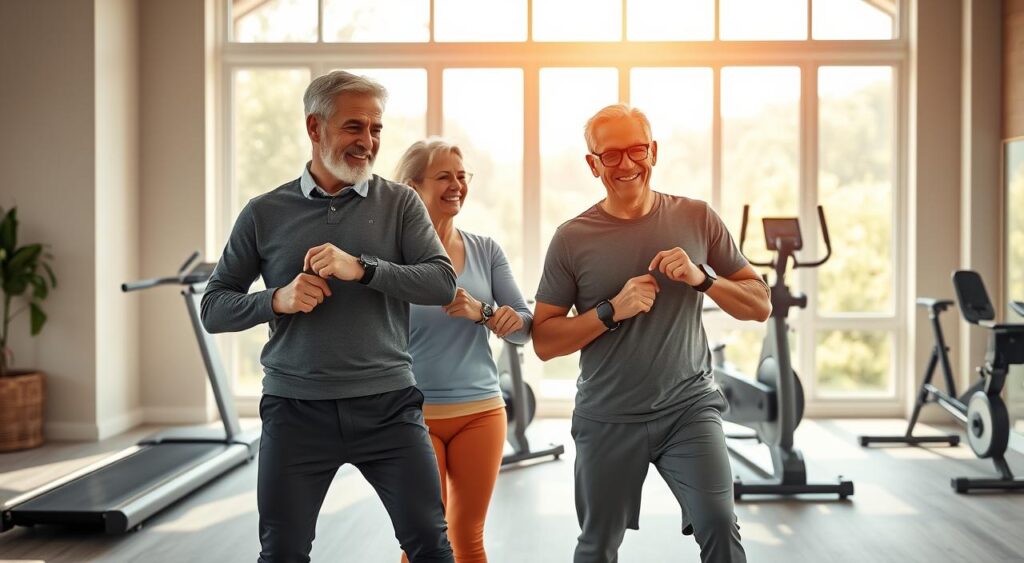
Fitness Trackers and Apps
Fitness trackers and apps have changed how we exercise. Tracking vigorous intensity workouts is crucial for enhancing physical fitness and overall health, especially for seniors. They track your steps, heart rate, and even how well you sleep. Fitbit and Apple Watch give detailed info to tweak your workouts for the best results for seniors. Apps like MyFitnessPal and Strava help you set goals, see your progress, and keep up your motivation.
Online Classes and Resources
Online classes and resources add fun and flexibility to working out. There are also many online resources specifically for seniors exercise, providing tailored guidance and routines. Sites like YouTube and SilverSneakers have lots of videos, online classes, and articles just for seniors. You can learn about all kinds of exercises, like yoga or strength training, and do them at home.
Virtual Health Professional Consultations
Telehealth services are more popular now, making it easy to talk to health pros without going anywhere. Professional advice can significantly improve the quality of life by addressing individual health needs. In these online meetings, you can get advice tailored to you, change up your exercise routine, and get tips for specific health issues. By using these tips and expert advice, you can make your workouts better and enjoy all the benefits of exercise for seniors.
Common Myths About Senior Fitness
In the world of senior fitness, some wrong beliefs stop many from getting active, such as the myth that older adults cannot build strength. Knowing the truth can help you start exercising with confidence. It’s great for older people to stay active, as it offers many benefits.
Debunking Age-Related Misconceptions
Some think older adults are too weak to exercise. But that’s not true. You can adjust any exercise to match what you’re capable of doing. For instance, walking, swimming, and yoga are all great for seniors. They’re good for your body and mind.
Understanding the Benefits of Strength Training
It’s a myth that lifting weights is bad for seniors. With the right instructions and weight, strength exercises help keep muscles and bones strong. It also helps older adults keep their balance and lowers the chance of falling.
The Reality of Exercising with Chronic Conditions
Dealing with ongoing health issues can make exercise seem hard. But physical activity, designed for your needs, can make you feel better. It can improve your life. Doctors can guide seniors to exercise safely, ensuring their health stays on track.
Resources for Senior Fitness
Today’s world is fast. It’s tough to keep up with senior exercise tips and stay healthy. But many resources are there to help you be active in your golden years. From local programs to online platforms, there’s a lot designed to boost your fitness journey.
Local Community Centers and Programs
Community centers have classes made for seniors. These programs help you exercise and make new friends. Plus, experts are there to guide you, keeping you safe and healthy.
Online Resources and Support Groups
The web has loads of resources for fitness. You’ll find workout videos, fitness plans, and active lifestyle tips for free. Also, online groups offer advice and support from people who understand your goals. This boosts your health and morale.
Fitness Magazines and Educational Websites
Fitness magazines and websites are great for senior fitness. They share the latest health research and exercise tips. Learning new trends and tips makes working out fun and effective. They also explain senior exercise rules, helping you follow the best practices daily.
FAQ
What are the benefits of regular exercise for seniors?
Exercising helps seniors feel better overall. It reduces the risk of diseases like osteoporosis by keeping muscles and bones strong. It also helps with mental health, decreasing depression and anxiety.
How does exercise impact mental health in seniors?
Exercise lowers depression and anxiety in seniors. This makes life happier, improves mental health, and supports cardiovascular health.
How does regular physical activity reduce the risk of chronic diseases in seniors?
Being active keeps muscles and bones strong, important for avoiding osteoporosis. It also helps control diabetes and heart disease.
Why is it important to consult with a healthcare provider before starting an exercise routine?
Talking to a healthcare provider before exercising checks your health level and suggests safe exercises. This ensures the routine is good for you.
How can self-assessment techniques help seniors understand their fitness levels?
Self-assessment shows your strengths and what needs work. This helps make sure your exercises are just right and safe.
Why is it essential to recognize and respect your limitations while exercising?
Knowing and respecting your exercise limits avoids too much strain and injuries. This makes your fitness plan safer and more effective.
How can seniors set realistic fitness goals?
Creating short and long-term fitness goals with the SMART framework boosts motivation and helps keep track of your success.
How can you track your fitness progress effectively?
Log your activities or use digital tools to see your improvements. Checking and updating your goals keeps you going towards better health.
What types of exercises are best for seniors?
Seniors should do cardiovascular activities like walking or swimming, strength exercises, and flexibility workouts. This mix keeps you healthy and helps prevent falls.
How should seniors do strength training at home?
Do simple strength exercises safely at home like wall pushups or using resistance bands. Start easy and focus on proper form.
How can seniors create a safe exercise environment?
Pick a clear space for working out, use steady chairs or non-slip mats, and be mindful of what could cause injuries.
Why is it important to incorporate rest days in a workout routine?
Rest days are key for muscle repair, avoiding tiredness, and making sure your exercises don’t harm you.
How can seniors stay motivated to continue exercising?
Exercising with friends, joining classes for social fun, and celebrating every win boosts your drive to stay active.
What nutritional guidelines should active seniors follow?
Eat a well-balanced diet and stay hydrated. Certain supplements might help too, for better fitness and recovery.
How can seniors recognize the signs of overexertion?
It’s important to tell apart normal exercise pain from signs of overdoing it, like severe pain or extreme tiredness. This helps avoid injuries and manage health better.
How can technology aid in a senior’s fitness journey?
Fitness trackers, apps, and online classes provide customized exercise plans and health advice. They help keep track of your fitness in a fun, modern way.
What are some common myths about senior fitness?
Some wrongly believe seniors are too weak for exercise or strength training is risky. But research shows exercise is good for them, especially with doctors’ advice.
What resources are available for senior fitness?
Community centers, online groups, and websites give helpful exercise tips, programs, and support for staying active as you age.