



Choosing the right pickleball paddle in 2021 means knowing the difference between polymer and graphite types. Your decision affects your game’s performance, cost, and how comfortable you feel. Polymer paddles are softer and quieter, liked by players who want more control and less stress on their arms. Considering all these factors will help you find the perfect pickleball paddle for your needs.
Graphite paddles, on the other hand, are stiff and responsive. They’re lightweight but powerful, great for players who like speed and precision. This detailed comparison will help you pick the best paddle for your style and needs.
Key Takeaways
- Polymer paddles provide a softer, quieter game experience.
- Graphite paddles are lightweight and deliver more power.
- Your playing style greatly influences the choice between polymer and graphite paddles.
- Both types of paddles come with different cost considerations.
- Comfort and performance under various conditions are key decision-making factors.
Understanding the Basics of Pickleball Paddles
When exploring pickleball paddle materials, knowing their core differences is key. What Are Polymer Paddles? They are made from plastic and resin, creating a mix that is strong yet gentle to touch. The core material in most polymer paddles is a polypropylene honeycomb core, which provides excellent control and a large sweet spot. This blend is perfect for those who love to play with precision and strategy.
And what about What Are Graphite Paddles? These paddles have a layer of carbon fiber. The paddle face, which is the surface that contacts the ball, is often made from graphite or carbon fiber, and the choice of surface materials can significantly impact power, spin, and control. This makes them light and stiff. Players aiming for speed and powerful shots find these paddles ideal.
In contrast, a wooden paddle is generally less ideal for active players. Wooden paddles have poor vibration absorption due to their paddle design , which can lead to increased arm soreness and fatigue during extended play.
Both core material and surface materials are key factors in paddle construction and performance.
To quickly compare pickleball paddle materials, see this table:
| Feature | Polymer Paddles | Graphite Paddles |
| Material Composition | Plastic and resin blend | Carbon fiber layer |
| Gameplay Feel | Softer, control-oriented | Stiffer, power-oriented |
| Durability | High | Moderate |
| Weight | Moderate to heavy | Lightweight |
Looking closer, each paddle type serves different player needs. You might like polymer paddles for their strength and adaptability. Or maybe you prefer graphite paddles for their quick and forceful play style. Picking the right paddle can really boost your game. It’s important to know what each paddle offers on the court.
Key Features of Polymer Paddles
Polymer paddles stand out for being tough and great at their job. They’re perfect for both new and skilled players. Their solid build keeps them in good shape through lots of games. Many polymer paddles use a honeycomb core, which enhances durability and control. The choice of core materials, such as polymer or honeycomb, also affects the paddle’s feel and performance. Polymer paddles are such an affordable paddle option, offering a good balance of power, quality features, and comfort at a lower price point. This means they’re a smart buy if you play pickleball often.
These paddles help you feel less tired. They’re usually lighter, making it easier to keep playing for a long time. When looking at buying guides for pickleball paddles, consider how weight affects your play and energy.
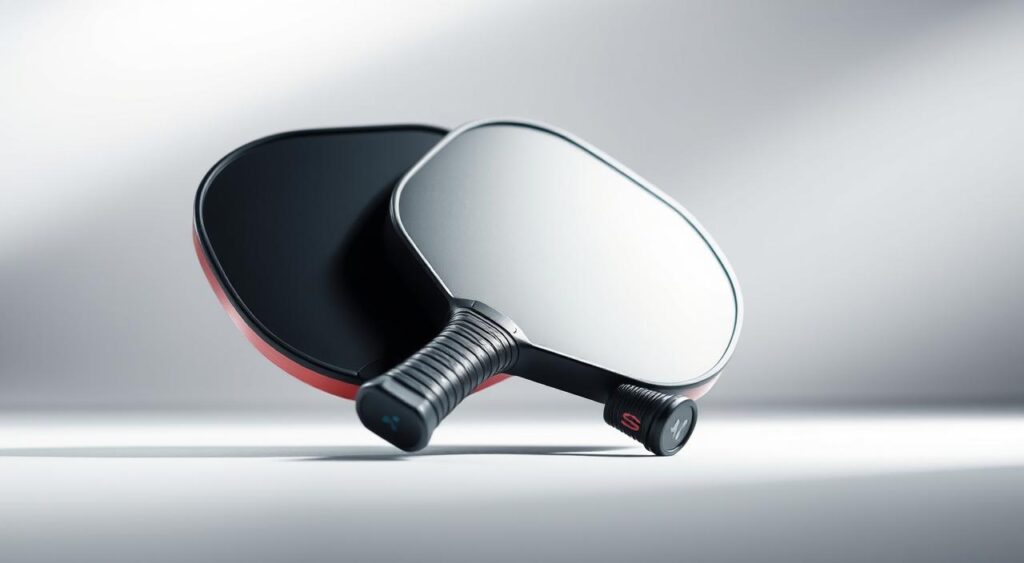
The grip on these paddles can be made just right for your hand. This is great for players who need extra help holding the paddle or get tired hands easily. A good grip means you can control the paddle better and hit more precisely. Polymer paddles often have larger sweet spots, making them more forgiving for players.
In terms of pickleball paddle weight comparisons, polymer paddles often lead. They’re light yet strong, good for many play styles. They work well in different kinds of matches, making them versatile and dependable.
Choosing a polymer paddle is a smart move. It gives you gear that lasts long and performs well. They are a great choice for upgrading your pickleball equipment.
Key Features of Graphite Paddles
Graphite paddles make a unique, pleasing sound when they hit the ball. This sound is something a lot of skilled players look for. They are designed to help with spin and control. Many graphite paddles feature a carbon fiber surface, which enhances spin generation and provides more control, making your shots more accurate during fast-paced games.
These paddles are great for strong returns because they’re stiff. This stiffness helps you play more aggressively. It also lets you control the ball better. This means you can be both powerful and precise.
Big names like Selkirk, Paddletek, and Onix make top-notch graphite paddles. Selkirk paddles, in particular, are known for superior control due to their carbon fiber surfaces. They offer different grip sizes to fit everyone’s hands. This makes playing more comfortable and enjoyable. Choosing a graphite paddle means you’re getting the best sound and feeling from your equipment.
Graphite paddles boost your spin and power. Players who value these skills in their games prefer them. Graphite paddles are often considered a performance paddle, offering an ideal balance of control, power, and durability for higher-level play. Advanced players seeking advanced paddles for higher-level play often favor these performance paddles. The unique combination of sound and feel they provide can take your game to the next level.
Consider unlocking your potential with a premium graphite paddle, tailored to meet your specific needs.
Differences Between Polymer and Graphite
Comparing pickleball paddles requires grasping the key differences between polymer and graphite options. Knowing these differences helps choose the right paddle for your style and preference.
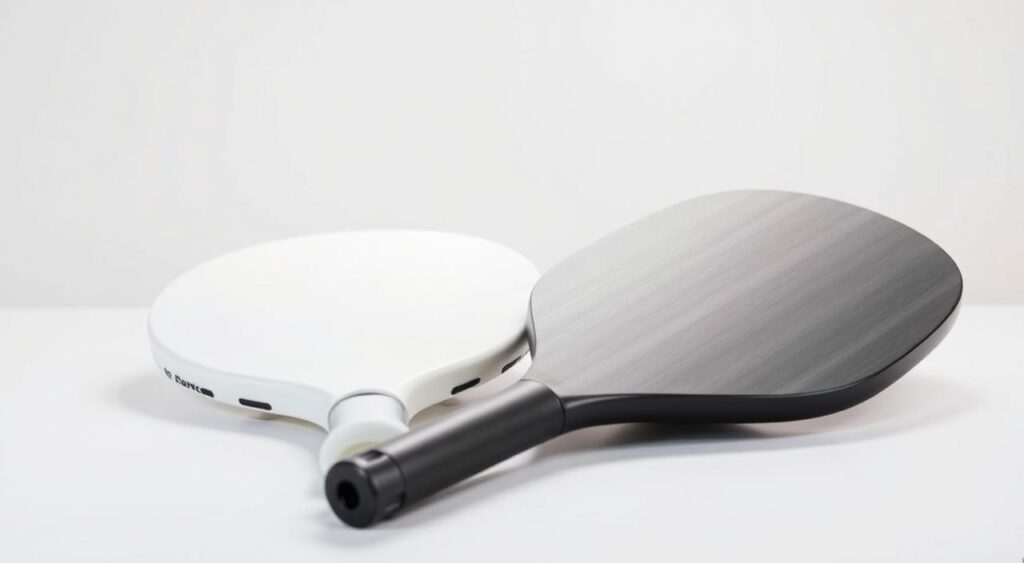
Weight differences play a big role in decision-making. Graphite paddles are lighter, allowing for quicker moves and better speed. Their lightweight helps improve your game, especially if you value fast play. Choosing a light or midweight paddle can improve maneuverability, control, and reaction time, especially during fast-paced play near the kitchen or in doubles.
Cost is another important factor. Graphite paddles, with advanced materials, cost more. They offer more power and speed, making them popular among serious players. Polymer paddles are often seen as an affordable paddle option for those on a budget, while still providing good durability and control.
When comparing different paddles, it’s important to look at paddle specs such as paddle length and swing weight, as these factors can significantly impact performance and comfort.
| Feature | Polymer Paddles | Graphite Paddles |
| Weight | Heavier | Lighter |
| Cost | Less Expensive | More Expensive |
| Suitability | Control and Prolonged Play | Power and Speed |
Swing weight affects how easily you can maneuver the paddle and can help reduce fatigue or arm strain during play.
Choosing a paddle also depends on your playing style. If speed and power are what you want, go for graphite paddles. For those valuing control and long games, polymer paddles are better due to their durability and weight.
Looking into detailed pickleball paddle reviews will show these subtle yet important differences. It helps in picking the paddle that suits you best. Besides, considering the cost gives insights into what offers the best long-term value for improving your gameplay.
Paddle Construction and Design
The construction and design of pickleball paddles play a huge role in how they perform on the court. Most modern paddles are made from materials like graphite, composite paddles, or wood, each offering unique benefits. Graphite pickleball paddles are known for their lightweight feel and quick response, making them a favorite for players who want fast action and sharp control. Composite paddles offer a good balance of power and spin, thanks to their layered construction that often combines fiberglass or carbon fiber with a polymer core. Wood paddles, while more affordable, are heavier and less common among competitive players.
A well-constructed pickleball paddle can help you generate more power and spin, giving you an edge in both offensive and defensive play. The way the paddle is built—including the thickness of the core, the surface material, and the overall design—affects how the ball reacts off the face. Thinner paddles provide more pop and agility, but may offer less control and energy absorption compared to thicker paddles. Advanced paddle construction can also reduce vibration, making play more comfortable and consistent. When choosing your next paddle, pay close attention to the materials and design features, as these will directly impact your performance and enjoyment on the court.
Edge Guard: Protection and Performance
The edge guard is an essential feature of any quality pickleball paddle. Acting as a protective rim around the paddle’s edge, the edge guard shields your paddle from chips, cracks, and other damage that can occur during intense play or accidental drops. A durable edge guard not only extends the life of your pickleball paddle but also helps maintain a consistent feel and performance over time.
Edge guards come in different thicknesses and designs. Some paddles feature a thicker edge guard for maximum protection, which is ideal if you play on rough surfaces or tend to hit the ground often. Others opt for a thinner edge guard, which reduces weight and increases maneuverability, allowing for quicker reactions and smoother swings. When selecting a pickleball paddle, consider how the edge guard will affect your play—look for a balance between protection and performance that matches your playing style and needs.
Paddle Shape and Size: Impact on Play
The shape and size of your pickleball paddle can make a big difference in your game. An elongated paddle features an extended length, which increases your reach and allows you to generate more power and improve shot accuracy. However, the trade-off is a smaller sweet spot, and this type of paddle is often preferred by more experienced players who can take advantage of its design features. Elongated paddles, for example, offer a longer reach and a larger sweet spot, making it easier to generate more power and cover more of the court. These paddles are popular among players who want to maximize their power and control, especially during aggressive play. On the other hand, standard or wider paddles provide better maneuverability and a forgiving sweet spot, which is great for players who value precision and quick reactions.
Paddle weight is another important factor. A lighter paddle is easier to swing and helps reduce fatigue, making it a good choice for beginners or those who play long matches. Heavier paddles, however, can deliver more power and stability, which advanced players may prefer for driving shots and blocking at the net. The right paddle shape and size depend on your playing style—whether you want more power, better control, or a balance of both. Take time to try different paddle shapes and weights to find the perfect paddle that complements your strengths and helps you play your best.
Evaluating the Grip and Comfort
The grip size of a pickleball paddle greatly affects your comfort and game. There are different Grip Size Options for everyone’s hand size. This ensures you find the best fit for how you play. Grip circumference, which is the measurement around the handle, is used to ensure a proper fit.
To measure your grip size, use a ruler to measure the distance from the tip of your ring finger down to the middle crease of your palm. This measurement helps you determine the appropriate grip circumference for your hand.
Picking the right grip size helps avoid injuries like tennis elbow. Smaller Grip Size Options are great for those who like to spin the ball. They allow for more wrist movement. On the other hand, larger grips provide stability and control, perfect for players with big hands.
Here are the Grip Size Options by hand size:
| Hand Size | Grip Size | Benefits |
| Small (less than 7 inches) | 4 inches | Enhanced wrist action and spin |
| Medium (7 to 8 inches) | 4.25 inches | Balanced control and comfort |
| Large (more than 8 inches) | 4.5 inches | More stability, better for control |
Knowing the differences in pickleball paddle grip sizes helps you choose the right one. Keep your hand size and play style in mind when picking from the Grip Size Options. A secure grip is essential for maintaining control and comfort during extended play. This will make your game better and keep you comfy on the court.
How Playing Style Influences Paddle Choice
Choosing the right pickleball paddle depends on how you play. Beginners vs. advanced players have different needs that can impact their game. A beginner paddle is specifically designed for ease of use, comfortable weight, and value for money, making it ideal for new players. Beginner paddles, such as a beginner pickleball paddle, are designed for ease of use and forgiveness, making them ideal for those just starting out. Control paddles are also a great choice for players who prioritize precision and accuracy in their shots. Beginners often go for polymer paddles because they’re easier on the hands and forgive more mistakes. These paddles help new players as they improve their skills, and lighter paddles are often preferred by those new to the game.
Advanced players usually prefer graphite paddles. Graphite paddles provide precision and the power needed for forceful shots. This is key in high-stake games. When it comes to paddle weight, a lightweight paddle or lightweight paddles are easier for beginners to maneuver and reduce fatigue, while a heavier pickleball paddle can provide more power for advanced players. Picking between polymer and graphite boils down to your style: are you looking for power or control?
Here is a detailed pickleball paddle comparison to show the differences between the best pickleball paddles :
| Feature | Beginners | Advanced Players |
| Preferred Paddle Material | Polymer | Graphite |
| Playing Style | Control Players | Power Hitters |
| Impact | Softer | Stiffer |
| Forgiveness | Higher | Lower |
Looking at compare pickleball paddle materials, it’s apparent that polymer and graphite paddles serve different styles. Whether you’re a beginner looking for forgiveness with beginner paddles or lighter paddles, or an advanced player needing precision and power with heavier paddles, choosing the right paddle will greatly affect how you play.
Popular Brands and Their Offerings
Looking for the best pickleball paddle? Check out top brands to make a smart choice for your game. These brands are recognized for producing some of the best pickleball paddles, as rated by players for their performance, durability, and value. Paddletek and Onix lead with strong polymer paddles that boost control. Selkirk and Pro-Lite shine for those preferring graphite paddles, focusing on power and lightness. Some brands also offer fiberglass paddles and fiberglass pickleball paddles, which are known for their power and control, larger sweet spots, and affordability.
| Brand | Specialization | Key Features |
| Paddletek | Polymer | Durable designs, enhanced control |
| Onix | Polymer | Excellent control, durability |
| Selkirk | Graphite | Powerful, lightweight |
| Pro-Lite | Graphite | Power emphasis, lightweight design |
Top Choices in Polymer Paddles feature creative designs using advanced materials. These cater to various playing styles. Hybrid paddles, with unique shapes like curved tops and longer handles, and thermoformed paddles, known for their user-friendly design and control, are innovative options available from certain brands.
Choose polymer paddles from Paddletek and Onix for better durability and control. Or, go for the power and light feel of graphite paddles from Selkirk and Pro-Lite. Carbon fiber paddles are also popular, especially among advanced players, for their premium performance, power, and spin. Each brand offers something special for your play style. Trying a great paddle from a reputable brand can make a big difference, and switching to an other paddle can change your gameplay experience by offering new levels of control and confidence.
Testing the Paddles: Senior’s Perspective
Senior players find comfort during play very important. Paddles with padding and a design that fits their hand well can lessen wrist and joint pain. Many seniors often test two paddles side by side to find the best fit for their needs. They tend to like larger grips for a better hold and less pressure on their fingers. Paddles with ergonomic grips and suitable materials can also significantly enhance ball control for senior players, making precise shots easier.

We looked closely at how grips feel to seniors. They prefer light paddles with strong grips. Paddles made of polymer are softer, making them comfy. Graphite paddles, though firmer, give a good feeling of touch.
Now, let’s see what we found in our tests, including how each paddle plays in terms of comfort and control for seniors:
| Paddle Type | Comfort Rating | Longevity After Use |
| Polymer | High | Excellent |
| Graphite | Moderate | Very Good |
Both polymer and graphite paddles last a long time with little wear, as seniors report. The material of the paddle changes how it feels over time, affecting comfort and how well one plays. It’s smart to think about these Grip Test Results when looking for pickleball paddles.
According to reviews, polymer and graphite paddles both have benefits. So, the best paddle for someone depends on how they like the paddle’s feel and weight, and how comfy it is during games. Playing pickleball with the right paddle can make the game more enjoyable and help reduce discomfort for senior players.
Recommendations for Specific Players
Finding the right pickleball paddle is key for every player’s game. The Paddletek Bantam series is a great choice. Its wide sweet spot makes it easier for new players to hit accurately and build confidence. The surface texture of the Bantam series, featuring a textured surface, helps beginners generate more spin and control the ball better, making it easier to add rotation and improve shot precision.
The Selkirk AMPED series stands out. It’s made from graphite, so it’s both strong and light. This paddle helps in playing more dynamically and precisely, perfect for high-level competition.
Here’s a quick comparison to aid your decision:
| Criteria | Best Polymer Paddle for Beginners | Ideal Graphite Paddle for Advanced Players |
| Recommended Series | Paddletek Bantam | Selkirk AMPED |
| Material | Polymer | Graphite |
| Suits | Beginners | Advanced Players |
| Key Features | Wide sweet spot, forgiving | Powerful, lightweight |
If you prioritize speed, shot accuracy, and enhanced spin, consider an aerodynamic paddle. Its design features make it the fastest paddle option, offering superior control and precision for competitive play.
Where to Buy the Best Paddles
Choosing where to buy a pickleball paddle, local or online, needs careful thought. Local stores let you touch and feel the paddle before buying. This is great for first-timers. You can check its weight and how it feels in your hand.

Online shops, however, have a huge range of paddles. Many online retailers offer a wide selection of pickleball gear, including affordable paddle options for all budgets. They carry many brands, like JOOLA or Selkirk. Plus, you might save money with online deals. When comparing options, remember that other paddles may have issues like surface wear, which can decrease spin performance and require more frequent replacement, so consider durability and replacement needs. But, read reviews and product info carefully before choosing.
Our detailed buying guide pickleball paddles can also help. It gives tips on comparing paddle materials. Whether buying locally or online, the right paddle fits your play style and comfort.
Conclusion: Choosing the Right Paddle for You
Choosing the right pickleball paddle means thinking about how you play, what feels good in your hands, and how much you want to spend. There are different paddles for everyone. Polymer ones are great for beginners or those who like a light paddle they can handle easily. Graphite paddles, though, are better for seasoned players who want more power and accuracy.
Think about the paddle’s grip and how comfortable it feels. This affects how well you play. There are many brands with different kinds of paddles to try. Picking the right one can really improve your game, matching your skills and style.
You should try out a few paddles to see which one you like best. Reviews of pickleball paddles often point out that comfort and how the paddle suits your game are key. Consider trying a new paddle with innovative features, such as replaceable surfaces, to further enhance your performance. With the advice from this guide, you’re ready to pick a paddle that lifts up your pickleball game.
FAQ
What are the main differences between polymer and graphite pickleball paddles?
Polymers, a mix of plastic and resin, provide a soft game feel. They are good for control. Graphite paddles are light and stiff. They offer speed and are good for a powerful game.
Which type of pickleball paddle is best for beginners?
Beginners often choose polymer paddles for their gentle touch. They help with control. The Paddletek Bantam series, for example, is forgiving and easy to use.
What advantages do graphite paddles offer for advanced players?
Graphite paddles make a unique sound and give a crisp feel. They’re great for adding spin and precision. Advanced players like them for powerful returns. The Selkirk AMPED series is a top choice.
How does paddle weight affect gameplay?
Paddle weight changes how you handle the paddle and how tired you get. Light paddles, like those made of graphite, are quick and easy on the arms. Heavy ones, often polymer, add power but can tire you out with long use. Your play style and comfort help decide which is best.
Why is grip size important when choosing a pickleball paddle?
Comfort and performance depend on grip size. Small grips mean more wrist action and spin control. Big grips are more stable and suit larger hands. The right grip size can also prevent injuries and improve control.
What are some top brands for polymer and graphite paddles?
Paddletek and Onix lead in polymer paddles with durable and control-enhancing designs. Selkirk and Pro-Lite focus on graphite paddles featuring carbon fiber surface material or power and lightness.
Can senior players benefit from specific paddle features?
Yes, seniors often look for comfort. Paddles that are light and have big grips are easier on the joints. Both polymer and graphite types are good, depending on if they prefer control or power.
Where can I purchase pickleball paddles?
You can find paddles at local sports stores or online. Stores let you test paddles for feel and fit. Online shops offer more variety and sometimes lower prices. Think about weight, grip size, and your needs when choosing.
How do I choose the best pickleball paddle for my playing style?
Choosing the right paddle means thinking about your style and what feels comfy. Polymer is great for control and comfort. Graphite suits those who like power and precision. Trying different paddles, including elongated paddles, is key to finding the perfect match.
When selecting the best pickleball paddle for your needs, be sure to review paddle specs, including paddle length, as these factors can impact performance, durability, and suitability for your skill level.