


Needlepoint is a fun and soothing activity, especially good for older folks. It’s a great way to show your creative side and improve hand skills. If you’re just starting or getting back into needlepoint, it’s important to know the basics. Embarking on this creative journey allows you to create personalized works of art while enjoying a supportive environment.
In this guide for beginners, we’ll explain the must-know stitches and how to pick designs. This will help you begin your adventure in needlepoint with confidence.
Key Takeaways
- Needlepoint is a beneficial and calming hobby for seniors.
- Basic stitches are essential to mastering this craft.
- Selecting simple patterns is crucial for beginners.
- Needlepoint can help enhance fine motor skills.
- This guide aims to provide the foundation of needlepoint basics.
What is Needlepoint?
Needlepoint is a type of embroidery that’s been around for a long time. It’s popular because it can make detailed designs using basic tent stitch, and anyone can do it. It’s also good for the mind and hands, which is especially great for older people.
Overview of Needlepoint Craft
Needlepoint is done by stitching on a special kind of canvas. You can make anything from simple shapes to complex pictures. It’s adaptable, and there are easy techniques for seniors. It only needs a few basic supplies, so it’s affordable and simple to keep up.
There are also needlepoint kits available that make it easy for beginners to start.
Benefits for Seniors
Needlepoint offers many benefits for older adults. It can help improve hand-eye coordination and brain functions like focus and memory. This craft also reduces stress and gives a feeling of achievement. Plus, it’s a productive hobby that can lead to beautiful handmade items.
History and Evolution
The history of needlepoint is long and interesting. It started in ancient Egypt and was used to decorate things. In the Middle Ages, it was used for tapestries and church items. Now, it has evolved to fit modern styles and techniques, including various embroidery stitches making it more accessible than ever.
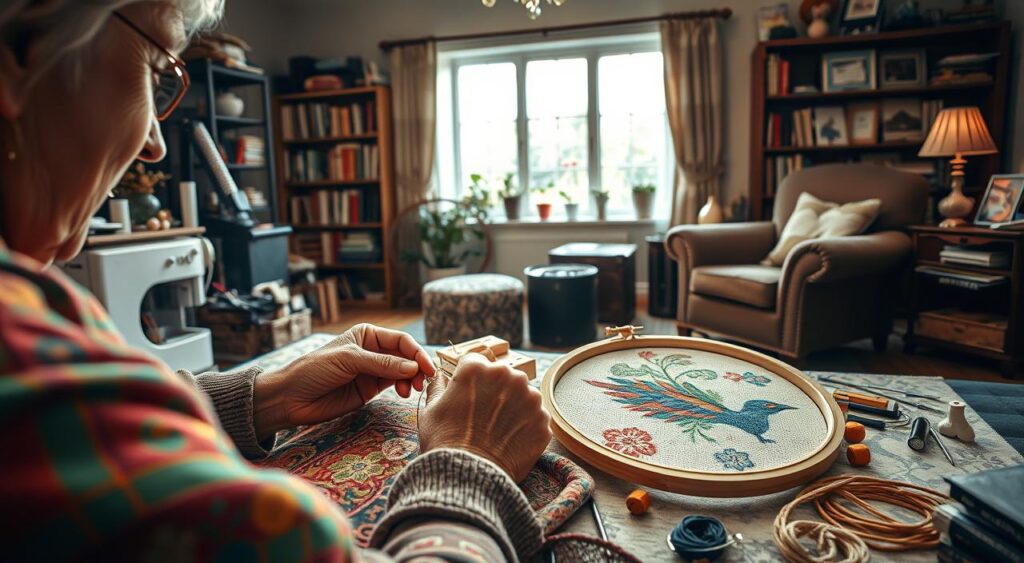
Adding needlepoint to your routine can be very rewarding. It connects old art styles with new creativity. It’s a fun way to learn and make lasting art pieces.
Essential Supplies for Needlepoint
Starting with needlepoint can seem tough. But, picking the right supplies is a key first step. For older adults to enjoy making many needlepoint projects, it’s important to know the basic materials needed. We’ll look at the different needle wires, the best yarns and threads, and the must-have tools to make your needlepoint fun and rewarding. A needle threader can also be a useful tool for threading needles, especially for beginners.
Types of Needlepoint Canvas
Finding the right canvas type is key for any needlepoint work. The most seen types are mono, penelope, and interlock canvas.
- Mono Canvas: Has a single mesh weave, perfect for detailed designs.
- Penelope Canvas: Double mesh weave makes it good for different stitch sizes.
- Interlock Canvas: It’s made to last with excellent tension keeping.
There are various needlepoint canvases available for different types of projects, each offering unique benefits.
Yarn and Thread Selections
The choices for yarn and thread in needlepoint are vast. Picking the right ones can affect how your project turns out. Think about texture, thickness, and shine when choosing your threads for techniques like the gobelin stitch.
- Wool: Great for bigger stitches on rough canvases.
- Cotton Floss: It’s flexible and gives a smooth finish for detailed work.
- Silk Threads: Brings a fancy touch with a gentle shine for delicate projects.
For durability and a polished finish, consider using DMC Perle Cotton.
Tools You’ll Need
Having a full needlepoint kit makes crafting easier and prepares you for many projects.
Here are some senior-friendly needlepoint tips for key tools:
- Tapestry Needles: They have a blunt end making it easy to go through the canvas without splitting the threads.
- Scissors: Small, sharp scissors for accurate cutting are helpful for trimming yarn and thread.
- Embroidery Hoops/Frames: Keeping even tension on your canvas helps your stitches stay neat.
With these supplies, you’re ready to start great needlepoint projects for older adults. Remember, the right stuff and tools really help enjoy this lovely craft. Additionally, consider using a waste knot to secure the thread’s tail on the canvas’s surface, which prevents unraveling and makes the stitching process more organized.
Basic Needlepoint Stitches
Understanding basic needlepoint stitches is key to getting good at the craft. Whether you’re just starting out or want to get better, these stitches are the foundation. Mastering the ‘basic stitch’ is crucial for creating more complex designs. Let’s look at a step by step guide on some easy needlepoint techniques for seniors that are simple yet elegant.
The Continental Stitch
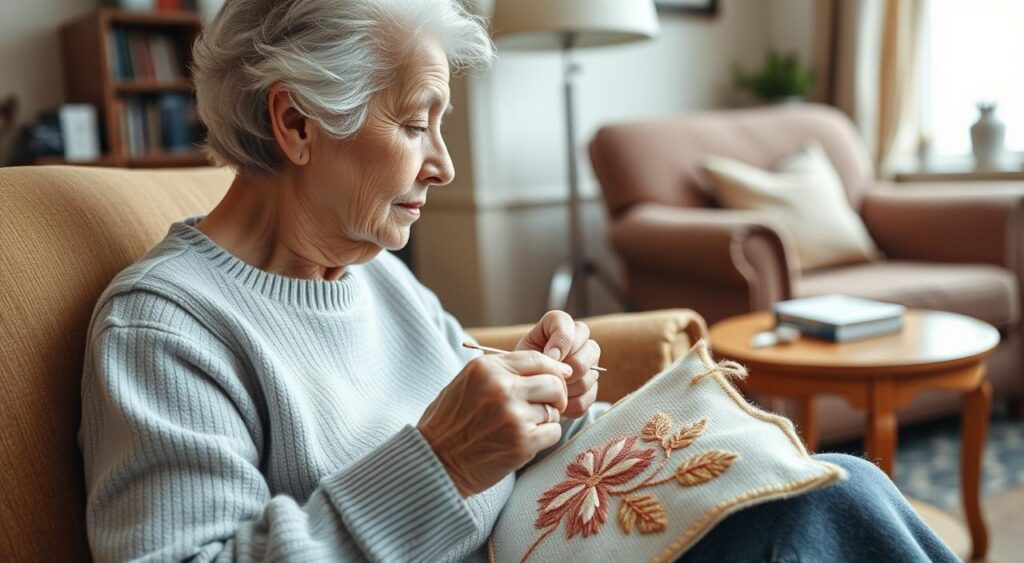
The Continental Stitch is often the first one learned. It’s easy and useful for filling large spaces. You start with the needle behind the canvas, pulling through to the front. Then, go diagonally up one stitch to the right. Pull the thread to the back and keep going. This makes a neat, diagonal pattern that’s great for beginners. When done with even tension, the Continental Stitch provides the best coverage, making it a versatile and durable choice for outlines and fine details.
The Basketweave Stitch
The Basketweave Stitch is crucial for your needlework. It creates a tight, dense fabric that’s strong. Begin at the top right with your needle. Move diagonally left one stitch, pulling the needle down. By switching between horizontal and vertical stitches, you make a woven pattern. This technique makes your work durable—one of the important easy needlepoint techniques for seniors. The Basketweave Stitch is executed in diagonal rows for a strong woven backing.
The Half Cross Stitch
The Half Cross Stitch is great for adding light shading and detail. It’s quicker and easier, ideal for short crafting times. Start from the bottom-left hole, make a diagonal to the top-right, and move to the next bottom-left hole. This stitch uses less thread on the back, so your canvas isn’t too thick. Remember to gently pull the thread to ensure your stitches are secure.
When to Use Each Stitch
Choosing the right stitch depends on your project needs. The Continental Stitch is best for big areas, as it covers quickly. The Basketweave Stitch is for making things durable, like when they’ll be handled a lot. The Half Cross Stitch is perfect for small, detailed parts, requiring precision. Using these needlepoint basics for seniors lets you create more complex and varied pieces.
Choosing Patterns for Beginners
Starting your needlepoint journey is exciting, especially with the right patterns. For seniors new to crafting, choosing the right patterns makes the experience better and more fun. Here are tips for seniors to help you begin your happy stitching experience. There are many beautiful designs available for beginners to choose from, catering to different styles and showcasing the artistic potential of needlepoint.
Simple Designs for Starting Out
At the start, pick simple designs. Look for geometric shapes, basic flowers, or easy borders. These patterns help you learn the basics without being too hard. Additionally, consider using kits that include all necessary materials and easy-to-follow instructions, making it easier for beginners to engage with needlepoint.
Consider this comparison:
| Pattern Type | Description | Difficulty Level |
| Geometric Shapes | Simple squares, triangles, and circles | Easy |
| Basic Floral Motifs | Daisy, tulip, and rose designs | Moderate |
| Straightforward Borders | Linear and patterned borders | Easy |
Combining Colors Effectively
Choosing colors wisely changes your project’s look. For beginners, it’s best to use a few colors that look good together. Sticking to three or four colors makes your design look good and easy to manage. Using threads of the same color can also help maintain a cohesive design.
Popular Themes and Motifs
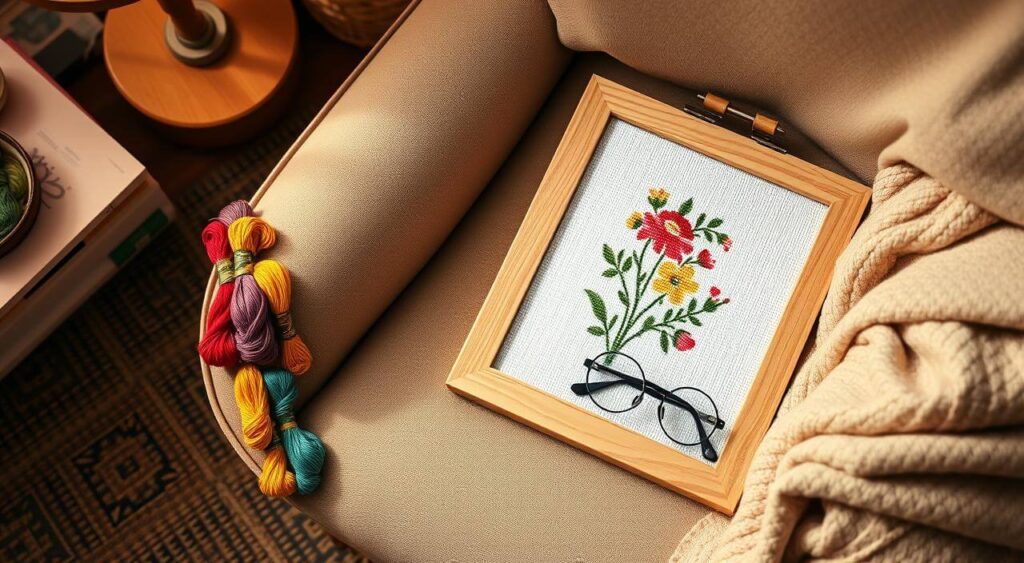
Picking themes you like makes your projects special. Beginners often enjoy animal, seasonal, or simple nature themes. These themes are fun and help you feel connected to your work. As you get better, try more complex designs and themes that are personal to you. There are a variety of needlepoint creations you can make with different themes and motifs.
These tips for seniors help make starting needlepoint rewarding and fun. Enjoy your stitching!
Tips for Getting Started with Needlepoint
Starting needlepoint can seem hard at first. But, with some simple steps, you can make a great workspace. You’ll also learn the key skills needed. Here are the basic tips to start. Additionally, we offer pro tips to enhance your needlepoint experience, focusing on creating a calming environment, incorporating relaxation techniques, and engaging with community resources.
Setting Up Your Workspace
Having a good workspace is key for your success. Make sure you have good light, a comfy chair, and a tidy place to work. A needlepoint stand is also a good idea. It keeps your hands free and lessens strain. With this setup, you can better work on your easy needlepoint techniques for seniors. Setting up your workspace now will also prepare you for your next project.
Reading Patterns Confidently
Knowing how to read patterns is important. Start with easy designs and slowly try harder ones. Look out for symbols and colors, they guide your stitch and color picks. Get to know the basic abbreviations found in patterns. These are part of the needlepoint basics for seniors.
Starting and Ending Threads Properly
Starting and finishing your threads the right way is crucial. Begin by threading your needle, leaving a bit of tail. Use waste knots to start and weave the tail into your work to end. This keeps your needlepoint basics for seniors projects looking good and lasting long.
Practical Techniques for Seniors
Needlepoint can be a rewarding hobby for seniors. It becomes even more fun with the right techniques and tools. Here are some tips to make needlepoint easier and more enjoyable for older adults.
Embarking on a stitching journey can be a rewarding and enjoyable adventure filled with learning opportunities.
Ergonomic Tools for Comfort
For seniors, using ergonomic tools can lessen strain and boost comfort. Consider ergonomic needles and thimbles for a better grip. This reduces hand pressure. Adjustable stands can also help you keep a good posture, avoiding back and neck pain during long stitching periods. Additionally, using a tapestry needle is important for comfortable stitching, as it is designed to easily thread through the canvas.
Managing Smaller Projects
Big needlepoint projects can seem daunting. Smaller projects are easier to handle and less exhausting for seniors. Begin with easy designs. You can even work on small parts that combine into something bigger later. This keeps you engaged and prevents overwork. For beginners, it’s a great way to start needlepointing with smaller, manageable projects.
Taking Regular Breaks
Taking breaks is key in needlepoint for seniors. Short, frequent breaks protect your joints and fight tiredness. During breaks, try simple stretches to relax your muscles and boost blood flow. Use a timer as a reminder to stop and rest for a happier needlepoint time. Taking breaks also ensures you can continue stitching comfortably without straining yourself.
Joining a Needlepoint Group
Being part of a needlepoint group can make your hobby more enjoyable. It lets you learn, share ideas, and get inspired. You can meet fellow enthusiasts both in your area and online. These communities offer endless opportunities to explore different styles and express your artistic vision.
Finding Local Classes or Clubs
Start looking for needlepoint groups at local craft stores or community centers. These spots are great for people of all skill levels, especially seniors eager to start new projects. Libraries or senior centers may also have needlepoint meet-ups. Local classes or clubs are welcoming to needlepoint beginners.
Online Communities for Support
If you prefer online spaces, there’s plenty of help available on the internet. Websites like Reddit, Facebook, and needlepoint forums are good for asking questions and sharing your needlework. They’re great for people with difficulty getting out or those in remote areas.
These communities also showcase a variety of needlepoint creations, highlighting different stitching techniques and patterns that can inspire both beginners and experts.
Sharing Ideas and Inspiration
In both local and online groups, sharing your projects can boost creativity. You can post pictures, talk about patterns, and even start group projects. This team spirit can improve your skills and keep your love for needlepoint strong.
Maintaining Your Needlepoint Projects
Keep your needlepoint looking great with the right care. We share simple methods for cleaning, storage, and mendings designed for seniors. This way, your needlepoint stays lovely for years.
Keeping Your Canvas Clean
Let’s start by keeping your canvas clean. A soft brush can dust off your needlepoint, stopping dirt from building up. If it needs more than dusting, a gentle hand wash in mildly warm soapy water works. Just don’t scrub it too hard. Additionally, to ensure color consistency in your project, always use threads from the same dye lot.
Storing Completed Pieces
Next, store your needlepoint right to keep it in top shape. Wrap your work in acid-free tissue paper and put it in a container that lets air flow. Stay away from very hot, cold, or damp places to protect the fibers. Proper storage is crucial for maintaining the quality of your needlepoint canvases.
Repairing Mistakes and Fraying Edges
Fixing errors and frayed edges is also crucial. A seam ripper makes undoing little mistakes easy. For edges starting to fray, dab some fabric glue or fray prevention liquid on them. These steps are part of easy needlepoint tips tailored for seniors, ensuring long-lasting projects where your stitches lie flat. Additionally, tying a knot, such as a waste knot, at the beginning of your project is essential to secure the thread and prevent any unraveling as you stitch.
Conclusion: Embracing Needlepoint as a Hobby
Needlepoint is a fun and rewarding hobby, especially for seniors. It’s not just about making pretty things. It’s also about feeling proud and being creative. Learning the basics and then tackling more complex patterns can be very satisfying. It can be a hobby you enjoy for many years.
Encouragement to Keep Practicing
Getting better at needlepoint takes time and practice. Every stitch helps improve your skills. Remember, even the pros had to start somewhere. They too were unsure about their first stitch. Keep going and don’t get upset by early hurdles. Stick with it, and you’ll be amazed at how your work gets better. Start stitching new projects to continually improve and refine your techniques.
Resources for Continued Learning
Many resources are out there to help you keep getting better at needlepoint. You can find books, online tutorials, and classes in your community. These can give you great advice and new techniques to try. Join online forums and social media groups for needlepoint to find support as you begin stitching. There, you can share what you’re working on, ask questions, and get inspired by others. Understanding how many strands are in a thread is crucial for selecting the right materials for your projects.
Final Thoughts on Creativity
Needlepoint is a way to show your creativity. It lets you make special gifts or decorate your home. Your projects show your journey in art. See each new pattern and stitch as a chance to grow your creative side. Enjoy your stitching!
FAQ
What are the basic stitches I need to know as a beginner in needlepoint?
Start with the Continental Stitch, Basketweave Stitch, and Half Cross Stitch. These basic stitches are key for more complex designs. Another essential stitch for beginners to learn is the scotch stitch, known for its straightforward technique and beautiful, textured backgrounds.
What is needlepoint and how can it benefit seniors?
Needlepoint involves stitching yarn through canvas. It helps seniors improve motor skills, brain function, and offers a creative escape through techniques such as tent stitch. Embarking on this creative journey can be incredibly rewarding, allowing individuals to create personalized works of art while promoting a supportive environment for beginners.
What is the history of needlepoint?
Needlepoint’s history stretches back to ancient craft techniques. It’s grown into a craft that people enjoy for its art and therapy benefits. Throughout history, a variety of needlepoint canvases have been used to create intricate and beautiful designs.
What essential supplies do I need to start with needlepoint?
You’ll need canvas, yarns and threads, tapestry needles, and scissors. These supplies get you ready to start creating.
Selecting the right mesh size for your canvas is crucial as it affects the number of stitches per inch, the level of detail, and the stitching speed.
What types of needlepoint canvas are available?
You can choose from mono, interlock, and penelope canvases. Beginners often prefer mono canvas for its simplicity.
Which yarns and threads are best for beginners?
Wool yarn is great for beginners because it’s tough and easy to use. Perle cotton and embroidery floss are also good for texture and finish.
How do I perform the Continental Stitch?
Do the Continental Stitch by stitching diagonally from bottom left to top right. It’s simple and very useful to learn.
Can you explain the Basketweave Stitch?
The Basketweave Stitch makes a woven texture with diagonal stitches. It’s good for large areas and gives a solid, even look.
What is the Half Cross Stitch and when should I use it?
The Half Cross Stitch is quick and simple, going across the canvas. It’s great for background filling or adding soft shading.
How do I choose appropriate patterns as a senior beginner?
Pick simple patterns with basic stitches and clear lines. Choose colors and themes you like but aren’t too complicated.
What tips can help me effectively set up my needlepoint workspace?
Make sure your space is bright and comfortable. Keep supplies organized and use a stand to ease hand strain.
How can I read needlepoint patterns confidently?
Practice with easy patterns that have clear guides and diagrams. With time, you’ll get better at reading more complex designs.
How should I start and end threads to maintain the quality of my projects?
Begin threads by anchoring them at the back of the canvas. To end, weave the end through back stitches to secure it.
Are there ergonomic tools that can help reduce strain while needlepointing?
Yes, ergonomic needles and scissors can lessen hand fatigue, making needlepoint easier for seniors.
How can I manage smaller projects effectively?
Work on small projects with simple patterns. This helps you finish quickly, feel proud, and build skills without stress.
Why is it important to take regular breaks during needlepoint?
Breaks prevent hand and eye strain. They help you stay comfy and enjoy needlepoint more.
How can I find local needlepoint classes or clubs?
Look at community centers, arts stores, or libraries. Many have senior-friendly groups for needlepoint.
Are there online communities that support needlepoint enthusiasts?
Online, find forums, social media groups, and sites for needlepoint. They offer tutorials, support, and a place for sharing.
What are the best ways to keep my needlepoint canvas clean?
Keep your hands clean to protect the canvas. Spot clean with soap and water if needed, and let it dry before you continue.
How should I store my completed needlepoint pieces?
Store pieces flat in a dry place, away from sun. Use acid-free paper to wrap them and keep dust off.
How do I repair common issues like mistakes or fraying edges in my needlepoint?
Undo stitches with a seam ripper for mistakes. For fraying, use fray check or whip stitch the edges.
What resources are available for continued learning in needlepoint?
You can find books, online tutorials, and workshops. Local groups and forums are great for learning and support too.
How can needlepoint enhance creativity and be an enriching hobby for seniors?
It offers a way to express through design and color. Needlepoint is calming, reduces stress, and gives a sense of achievement, especially when using techniques like the mosaic stitch .