



Starting a men’s mentorship program is a powerful way to connect men in your community. It lets them grow spiritually and become leaders. Introducing a Christian mentor into the program highlights the importance of effective spiritual mentoring, ensuring that relationships are intentional, faith-driven, and transformative. By leaning on the wisdom of the Book of Proverbs and advice from spiritual leaders at Cornerstone Church, you can set up a program. This program will focus on strong faith-based mentoring relationships, guiding younger men and passing on godly wisdom to the next generation under the authority of the Lord.
Christian mentoring is a biblically grounded approach, modeled by Jesus Christ and the apostle Paul in the New Testament, who both demonstrated the value of mentoring relationships for spiritual growth and discipleship. Christ Jesus and the early church set the foundation for Christian mentoring, with the apostles playing a crucial role in passing on godly wisdom and spreading Jesus’ teachings. Early Christian mentorship often took place within churches, which served as foundational communities for disciple-making and passing on godly wisdom. Following the Lord’s example, the apostles modeled how to witnesses entrust teachings to reliable individuals, following the biblical pattern of mentorship. Jesus knew the needs and potential of his disciples, modeling intentional and compassionate mentorship that guides and transforms. Mentoring men in faith involves sharing knowledge and real-life stories that hit home for them, embodying the essence of spiritual mentoring. When you begin this program, take steps like reaching out first and finding common ground. These actions are key to making relationships that really change lives.
Key Takeaways
- Men’s faith mentorship programs foster spiritual growth and leadership.
- Proverbs emphasizes learning from the wise for effective mentorship.
- Glean insights from established spiritual leaders, like those at Cornerstone Church.
- Great examples of mentorship can be found in both scripture and church history, serving as models for your program.
- Initial contact and shared experiences are essential for meaningful mentor relationships.
- Male mentorship for faith development is rooted in both spiritual and lived experiences.
- A spiritual mentor plays a key role in guiding men through their faith journey.
- Mentorship programs provide opportunities to share wisdom, helping participants grow spiritually and make a meaningful difference in someone else’s life through guidance and support.
The Role of Mentorship in Spiritual Growth
Being mentored by a spiritual mentor is crucial for a man’s spiritual development. Mentors share godly wisdom, helping you grow spiritually. They guide you in applying Biblical truths to everyday life, which helps you deepen your own relationship with God. This leads to a stronger, more meaningful relationship with God.
Key Benefits of Mentoring Relationships
There are many advantages to joining a Christian men’s mentor program. You’ll understand your faith better by sharing life experiences and challenges, gaining knowledge that enhances your spiritual journey . Plus, having a mentor who encourages you to spend time in prayer and reflection, and to pray together regularly as part of your spiritual journey, keeps you on track towards your spiritual goals.
These mentoring relationships also create a supportive network. Participants feel encouraged to pursue their spiritual goals through the support and motivation provided by the mentoring program, with many witnesses to their journey . This helps build a lively and caring community around you, where you can also make a positive impact in someone else’s life .
Defining Your Program’s Purpose and Goals
Setting clear goals is essential when starting a faith-based men’s coaching program. One of the primary objectives should be to teach biblical principles and life skills to participants, equipping them to grow and eventually teach others. Your objectives should match spiritual teachings and encourage growth among members. This clarity helps guide your mentoring methods and ensures mentors and mentees share a common goal.
Spiritual Objectives to Consider
When defining your program’s spiritual aims, focus on Christ’s teachings on love, humility, and helping others. Strive to foster an environment that motivates men to face daily challenges with these principles. A faith-based approach in men’s coaching can make a big difference. It helps individuals and communities face life’s hurdles with spiritual guidance.
- Deepening Faith: Encourage participants to enhance their relationship with God. They can do this by praying, studying the Bible, and being active in church.
- Building Character: Promote qualities like honesty, kindness, and determination. These should match religious values to support men’s spiritual and moral development.
- Community Service: Push for participation in activities that help the community. This reflects Christ’s message about assisting others and creating positive change.
Tailoring the Program to Your Community
Adapting your program to fit your community’s needs is crucial. Consider the unique aspects and culture of your community. This understanding lets you design a mentoring program that truly speaks to participants. This makes the program more effective and engaging.
| Community Demographics | Adaptation Techniques |
| Young Adults | Use digital tools and social media to keep them engaged. This also offers flexible ways to meet. |
| Families | Plan activities and events that include family members, allowing men to mentor and guide their children in faith. This lets men share their faith journey with their loved ones. |
| Seniors | Prefer traditional interaction methods like face-to-face meetings and church events. This suits the preferences of older members better. |
Tailoring your program this way makes your faith-based men’s coaching more impactful. It meets the spiritual and community needs of your initiative effectively by encouraging members to spend time together .
Identifying Potential Mentors and Mentees
Choosing the right mentors and mentees is key to a great men’s faith mentorship program. When picking mentors for religious guidance, it’s really important that they reflect the character of a father figure. It is also essential to select reliable people, including older women, who can be trusted to uphold the values and responsibilities of the mentorship program. We must pick carefully to make sure they fit the program’s spiritual goals, much like the role of the disciples.
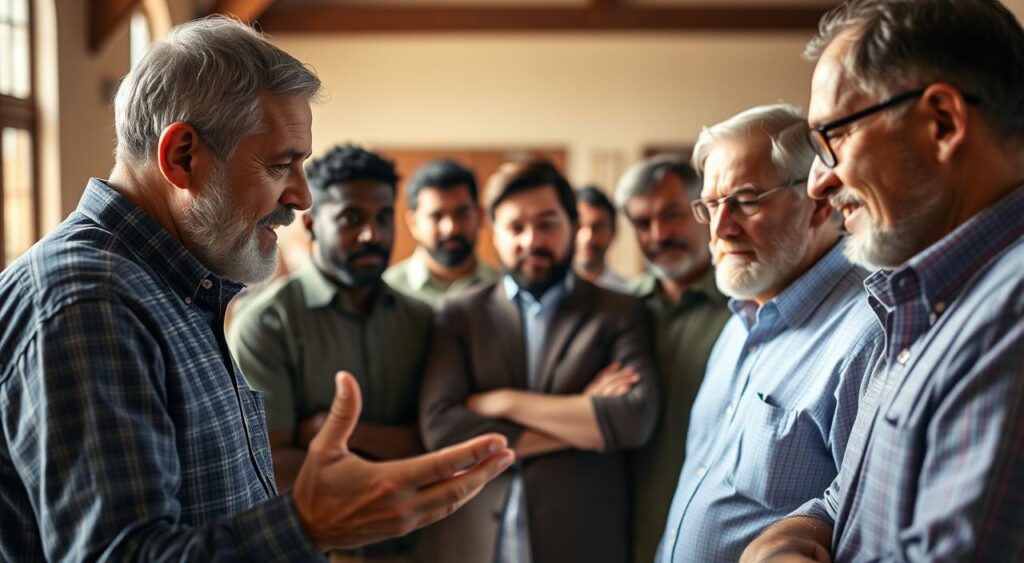
Qualities of Effective Mentors
Being a good mentor means more than being a role model. They need to have spiritual depth, understand others, and have lots of life experience. An older person often brings valuable life experience and wisdom to the mentoring role, helping to guide and support younger individuals. These things help mentors give wisdom that helps in both personal and spiritual growth, regardless of age. Programs succeed by picking mentors with these qualities, offering true and caring advice guided by the holy spirit.
How to Recruit Participants
Getting people to join men’s religious programs needs smart planning. Inviting someone directly works well because it’s personal and sincere. Encourage individuals to start mentoring by responding to the call to guide others in faith, taking the first step to make a difference. Also, showing stories of how the program changed lives can convince others to join, as they hear real-life testimonies of transformation. By promoting the program at community events, seminars, and workshops, people see the real benefits and positive changes it brings.
| Mentor Qualities | Recruitment Strategies |
| Spiritual Maturity | Personal Invitations |
| Empathy | Community Events |
| Life Experience | Sharing Testimonials |
Structuring Your Mentorship Program
Creating a strong program can greatly improve men’s spiritual guidance and help build lasting bonds. As Proverbs 27:17 reminds us, “As iron sharpens iron, so one person sharpens another,” highlighting the mutual growth that occurs in these relationships. When setting up your male mentorship for faith development, think about what the participants like, when they’re free, and your goals, while also considering what they may be wondering about their spiritual journeys.
Incorporating small groups into your program can foster deeper connections and spiritual growth, as these intimate gatherings provide a supportive environment for open discussion and personal development.
One-on-One vs. Group Mentorship
Choosing between one-on-one or group mentoring is key. One-on-one offers direct focus, perfect for deep faith and growth talks. It suits those wanting specific advice based on scripture. Meanwhile, group mentoring creates a sense of community and shared insights, letting everyone gain from different viewpoints. In a group setting, participants are exposed to a different perspective, which can enhance their spiritual understanding and encourage deeper reflection. Mixing both types can work well, using one-on-one for personal matters and groups for wider topics.
Setting Duration and Meeting Frequency
It’s crucial to decide how long and often meetings should be. You might pick weekly or every other week, based on everyone’s schedules. Staying consistent with meetings is important for keeping up with progress and encouraging ongoing spiritual growth.
Your mentorship program should be flexible but structured right for effect. Being able to change when needed shows you value everyone’s time and keep focused on male mentorship for faith development.
Developing a Curriculum for Spiritual Growth
Building a good curriculum is key to successful Christian men’s mentorship programs. It assures growth for both mentors and mentees in spirit and personal life. Curriculum developers should find examples of successful mentoring relationships to illustrate key principles and make the material more relatable. Diverse topics combined with engaging activities keep everyone interested and growing. They create a complete spiritual growth journey. The curriculum also encourages participants to follow Jesus in their daily lives, modeling his teachings and example.
Essential Topics to Include
A great curriculum covers basic Biblical truths, everyday Christian life, and current faith practices. Teaching spiritual truth, including key lessons from scripture, is essential, as it helps mentees understand the guidance of the Holy Spirit and live according to God’s word. Understanding Christianity’s core teachings builds a solid spiritual base, similar to what Jesus taught his disciples. Applying faith to daily life makes lessons hit home for mentees. These topics guide spiritual growth in Christian men’s mentor programs.
Incorporating Faith-Based Activities
Adding faith-based activities boosts the mentoring experience. Actions such as prayer, community work, and Bible studies help mentees use what they’ve learned. The power of spoken words during prayer and Bible study sessions offers encouragement and guidance, reinforcing biblical teachings. They deepen understanding, build community, and give a common goal. This makes men’s faith coaching effective, turning ideas into real faith actions as they are inspired to mentor someone .
A mix of teaching and active learning helps Christian men’s mentor programs. They create a complete spiritual growth journey. This leads to true, lasting changes in participants’ lives, as they are inspired to mentor someone in their own journey .
Facilitating Meaningful Connections
Making a space where mentees feel safe and valued is key for good religious men’s mentorship. These spaces let people talk about their worries and hopes freely, promoting hearing and understanding among participants. Creating such a safe environment also strengthens the mentoring relationship, fostering trust and deeper connection between mentor and mentee. This openness is a big step in their personal growth. A christian mentoring relationship is rooted in faith, grace, and the Holy Spirit, fostering spiritual growth and providing a safe, supportive environment for mentees within a Christian context.

Creating Safe Spaces for Discussions
Having discussions in a place that’s trusted and respectful is critical for mentorship. It’s important to focus on each person and their unique spiritual needs, ensuring that the mentoring relationship is centered on the individual. When mentees feel safe, they’re more open to sharing. They dive deep into personal and spiritual talks. This trust is vital for mentors who help men grow, making relationships stronger.
Utilizing Technology for Communication
Using modern tech can really boost a mentorship program’s success. Tools like video calls and messaging apps keep mentors and mentees connected, allowing them to share their words of encouragement . This tech is crucial in religious men’s mentorship. It helps them stay in touch, no matter where they are, making every interaction count.
Measuring Success and Impact
Evaluating your men’s mentorship program requires clear metrics. These should cover progress and specific indicators of growth and satisfaction. It is important to assess whether the program is achieving effective mentoring outcomes, such as building genuine relationships, fostering spiritual growth, and encouraging ongoing reflection. Regular feedback helps the program stay relevant to both mentors and mentees.
Setting Evaluation Metrics
To gauge your program’s effectiveness, focus on these metrics:
- Spiritual Growth Indicators: See if there’s more prayer, Bible study, and church going.
- Participant Satisfaction: Use surveys to check how satisfied everyone is with the support and growth they feel. Remember, mentors are not expected to have all the answers; their role is to guide and support mentees.
- Behavioral Changes: Look for positive behavioral shifts like more community work, better relationships, and leadership in church.
Gathering Feedback from Participants
Getting truthful feedback from mentors and mentees is crucial for improvement. Use surveys, interviews, and chats for insights. Ensure surveys ask varied questions to get comprehensive views. It is essential that every participant feels heard during feedback collection, so they know their opinions truly matter.
“Young men have plenty of zeal, but older men have more experience in walking the walk. The mentorship program bridges this gap, ensuring guidance that is both practical and inspiring,” shared Pastor Rick Warren of Saddleback Church.
In-depth interviews provide detailed feedback. Casual conversations let participants express freely. These approaches offer a full picture of the program’s effects.
By tracking these metrics and valuing participants’ views, your men’s program can evolve and positively change lives.
Sustaining Engagement and Growth
Keeping your male mentorship program lively and effective needs continuous care and smart work. Alumni can serve as spiritual mentors to new participants, guiding them in their faith journey and fostering growth through relationship-building and curiosity. To keep everyone involved and help the program grow, a few main steps are crucial. These steps keep the energy alive and make the program’s influence bigger, steering clear of dishonest gain.
Sustaining engagement means regularly checking in with participants to understand their evolving needs and challenges. This ongoing communication helps mentors tailor their guidance and keeps mentees motivated. Encouraging open dialogue within the group fosters trust and accountability, which are essential for long-term growth.
Another key element is celebrating milestones and spiritual victories together. Recognizing progress, whether big or small, reinforces commitment and inspires others. Hosting regular events, such as retreats, group prayers, or fellowship dinners, can rejuvenate the group’s enthusiasm and deepen relationships.
In addition, integrating fresh content and new learning opportunities ensures the program remains relevant and impactful. Bringing in guest speakers, introducing new Bible study materials, or incorporating service projects can provide varied experiences that enrich participants’ spiritual journeys.
Finally, fostering a culture of servant leadership within the program encourages mentees to become mentors themselves. This multiplier effect not only strengthens the community but also ensures the legacy of godly wisdom continues to be passed on faithfully.
Building a Network of Alumni Mentors
Creating a strong network of alumni mentors is key for long-lasting involvement. Mentees who’ve finished the program can mentor new ones, offering great value. They not only help new members but also enrich their own faith journey, regardless of age . By staying involved, alumni mentors have the opportunity to make a positive difference in someone else’s life, sharing wisdom and support that can shape the next generation.
This network of alumni keeps the cycle of mentorship going. It upholds faith and personal growth in your community. Such a network ensures that learning and support never end.
Continuing Education Opportunities for Participants
Providing ongoing education opportunities keeps your program relevant and helpful. Workshops, seminars, or online courses can cover spiritual, personal, and community needs. It is important to offer learning opportunities for older people as well, ensuring they are directed to reliable people who can share their wisdom. This approach offers well-rounded support for everyone’s spiritual path.
By keeping your program current and engaging, both mentors and mentees grow. This helps male mentorship for faith development flourish. A nourishing environment emerges where everyone can thrive.
FAQ
What spiritual objectives should be considered for a mentorship program?
The goals should include following Christ’s teachings. They should focus on facing everyday problems with faith. And they aim to share faith experiences with others.
How can you tailor a mentorship program to your community?
First, understand what your community needs. Talk to people and find out their spiritual and social challenges. This helps make your program relevant.
What qualities make an effective mentor?
A good mentor has spiritual depth, empathy, and life wisdom. They are deeply committed to their faith.
How can you recruit mentors and mentees for your program?
Use personal invites and share success stories. Hosting community events and seminars also attracts participants.
Should you choose one-on-one or group mentorship settings?
It depends on what people need. One-on-one offers detailed guidance. Group mentorship helps with shared learning and connections.
What metrics should you use to evaluate the program’s success?
Look at spiritual growth, participant happiness, and behavior change. Always ask for feedback to improve.