


Planning a traditional hymn sing is all about loving sacred music and its deep history. It goes beyond just a music event. It is a special gathering that brings people together in spirit. It also pays tribute to the history of sacred tunes. Hymn sings celebrate music traditions that have endured for many decades, connecting generations through shared worship. Traditional hymns play a significant role in catholic worship, where a variety of musical styles—from traditional to contemporary—are embraced to enrich the liturgical experience. By carefully setting up a traditional hymn sing, you help people connect with their faith. Many hymns are inspired by sacred scripture, biblical stories, and the desire to praise God. The melodies and words of these hymns touch the soul and help in praising God, especially when accompanied by good music . A beautiful melody can greatly enhance the emotional and spiritual impact of a hymn, making the experience more profound. Hymns speak to the soul and communicate spiritual truths that resonate deeply with believers. The importance of hymn tunes as the melodic foundation of hymns cannot be overstated, as they shape the overall effectiveness and longevity of hymn singing. This creates an unforgettable and joyful experience for everyone.
Key Takeaways
- Understand the historical significance of hymn sings to enhance the event’s impact.
- Focus on creating a meaningful and spiritual atmosphere.
- Select a venue that complements the sacred nature of the event.
- Choose a varied list of hymns to appeal to diverse congregational preferences.
- Encourage active participation from congregations to foster unity and engagement.
- Engage with local musicians and vocalists to enrich the musical experience.
- Promote the hymn sing event effectively to ensure robust participation.
- Reflect on participant feedback to improve future hymn sings.
Understanding the Importance of Traditional Hymn Sings
Traditional hymn sings are very important in religious groups that value sacred liturgy . They offer a chance for people to come together and share a worship experience through song. These events make old spiritual songs come alive again and are a cherished part of church music traditions. Singing an old hymn helps preserve its timeless lyrics and spiritual message for new generations. In catholic church worship, musical styles range from traditional Latin hymns to contemporary folk-based songs, reflecting both historical roots and modern inclusion.
Let’s look closer at why these gatherings are so important.
The Role of Hymns in Religious Communities
Hymns play a big role in religious places because they get everyone involved. A community hymn sing can make everyone feel as one in worship. Congregational singing strengthens the sense of unity and shared faith by encouraging active participation from the entire congregation. These songs often tell important spiritual lessons and offer comfort, meeting the community’s spiritual needs.
Historical Context of Hymn Singing
People have been singing hymns for hundreds of years, across many religious paths. Over many decades, generations have adapted and revived traditional hymns to keep the tradition alive. Historically, hymn singing groups have always been key in expressing faith. Many great theologians wrote hymns to inspire and strengthen people’s faith. For example, Martin Luther, a central figure of the Protestant Reformation, written the influential hymn “A Mighty Fortress Is Our God,” which remains a powerful example of hymns written to shape worship and theology. The lasting impact of hymns written by pastors and composers throughout history continues to inspire and unite faith communities. Knowing this history helps worshippers understand the deep legacy they are part of.
Benefits of Participating in Hymn Sings
Being part of a community hymn sing has many spiritual and social advantages. Spiritually, good music helps people connect deeply with the songs, bringing inner peace and strength, and touching the souls of participants. Socially, it offers a chance to bond with others in your faith group, making your community stronger.
| Aspect | Importance |
| Spiritual Engagement | Deepens personal faith and spiritual connection. |
| Community Unity | Fosters a sense of belonging and collective worship. |
| Historical Awareness | Enhances appreciation of religious traditions and heritage. |
Choosing the Right Venue for Your Hymn Sing
Choosing the right spot is key for a great hymn sing choir event. It should make everyone feel part of a community and uplift their spirits. Here are some tips for picking the perfect place for sacred music events, , like a church, a community center, a concert hall, or a Catholic church:
Factors to Consider in Venue Selection
Choosing wisely can make your religious music event special. The venue should be big enough for everyone but still feel cozy. Some venues are specifically designed to support Catholic liturgy and its musical requirements, making them ideal for events that include traditional old hymns or contemporary church music. Consider how easy it is to get there and safety. Make sure there’s parking and access by bus or train. Also, check that the cost fits your budget without cutting corners on quality.
Accessibility for Participants
It’s important to pick a place everyone can get to. This means having ramps, elevators, and wide doors for those who need them. It should also have bathrooms that everyone can use. Being close to where people live is a plus, especially for those attending holy mass making it easier for locals to come. Many Catholics appreciate accessible venues for attending hymn sings and other liturgical events.
Acoustics and Atmosphere
Good sound can make a big difference at a religious music gathering. Choose a place known for its great acoustics, like a church, a community center, or a concert hall. Venues that support sacred polyphony and Gregorian chant can further enhance the spiritual atmosphere, as this form of sacred music relies on acoustics to promote reflection and elevate worship. The right atmosphere also matters. A place with nice architecture or pretty views can add a lot to the mood.
| Venue Type | Advantages | Disadvantages |
| Church | Excellent acoustics, spiritual ambiance | Limited accessibility in some older buildings |
| Community Center | Good accessibility, ample parking | Variable acoustics |
| Concert Hall | Superb acoustics, professional setting | Higher cost |
Selecting Hymns for the Event
Picking the right hymns for your traditional hymn sing group is key to a memorable event. A thoughtful hymn selection makes sure your hymn sing concert touches everyone’s heart. When planning, consider both the hymn lyrics, tunes, and melodies to ensure a rich musical experience. Selecting hymn tunes that are both memorable and singable is important, as hymn tunes greatly contribute to the overall effectiveness of the hymn sing.
Start with beloved traditional hymns, then add diverse choices for different tastes, including old hymns with timeless lyrics and new hymns with fresh melodies.
Popular Traditional Hymns to Include
For any hymn sing concert, include beloved traditional hymns. Songs like “Amazing Grace,” “How Great Thou Art,” “Blessed Assurance,” and “Great Is Thy Faithfulness” are classics. “Great Is Thy Faithfulness” especially highlights God’s unwavering faithfulness, as expressed in the lyrics, and carries deep spiritual significance. They remind us of good times and carry deep spiritual meanings.
Creating a Diverse Hymn List
A varied hymn list keeps your event exciting and appeals to more people. Combine well-known hymns with new tunes or less familiar ones. This mix keeps the singing fresh for everyone, from the eldest to the youngest in your traditional hymn sing group. Including contemporary hymns and popular music can also help engage young people and make the event more relevant to all generations.
Considering Congregational Preferences
Knowing what your congregation likes is important for your event’s success. Ask them about their favorite hymns, styles, and musical tastes before the event. Consider whether to include contemporary music based on congregational preferences. Use their feedback to pick hymns that reflect your community’s spirit.
Below is a table showcasing a balanced selection of hymns for your hymn sing concert:
| Traditional Hymns | Contemporary Choices |
| Amazing Grace | 10,000 Reasons (Bless the Lord) |
| How Great Thou Art | In Christ Alone |
| Blessed Assurance | Cornerstone |
| Be Thou My Vision | Mighty to Save |
Finding Musicians and Vocalists
When you set up a hymn sing choir, finding skilled musicians and singers is key. The music director plays an important role in coordinating the musical aspects of the event, ensuring that all elements come together smoothly. They help make sure everyone has a good and meaningful time. Teaming up with local choirs or having special guest artists can really improve your event.
Collaborating with Local Choirs
One good plan is to join forces with a local sacred music group. Local choirs are often well-connected in the community and bring a lot of emotion to their performances. Many of these choirs have expertise in performing liturgical music, making them valuable partners for church events and services. Working together with these choirs builds unity and shared goals, which are important for a hymn choir.
Inviting Guest Artists
Bringing in guest artists is another great idea. These could be famous singers or musicians known for their hymn talents. You can invite guest artists to sing hymns that are meaningful to the community, blending traditional and contemporary worship songs for a deeper emotional connection. Guest artists bring their own style and can make your event unforgettable, especially when engaging young people with contemporary songs . They also help draw more people to your event.
Tips for Engaging Talent
Finding the right musicians and vocalists is crucial. They should know sacred music and hymn choirs. It is valuable to find musicians with experience in writing or arranging hymns, as this can bring fresh creativity and spiritual depth to your event.
Here are tips to help you:
- Start looking early to give yourself time to choose the best.
- Find people or groups with experience in sacred music performances.
- Hold auditions to see if they fit with your choir.
- Make sure they get the spiritual and emotional aims of the event.
- Communicate clearly about what you expect, including rehearsals.
By carefully picking your musicians and singers, you make sure your event uplifts and unites everyone involved.
Promoting Your Traditional Hymn Sing
Promoting your hymn sing event well is key to a big, excited crowd. Using different promotion ways can really help make your event known. Hymn sings are celebrated by communities around the world, connecting people of faith across cultures and nations.
Utilizing Social Media for Outreach
Social media is a strong way to tell people about your sacred music event. Use Facebook, Instagram, and Twitter to post details and content that people will like. Sharing often and using great pictures can grab people’s attention. Encourage your followers to listen to sample hymns you post online to engage them with the music.
Interact with your followers by making posts that get them involved. Try polls or countdowns to get people excited about the hymn sing.
Creating Eye-Catching Posters and Flyers
Posters and flyers are still great for spreading the word locally. Create eye-catching designs showing when and where your event is, and who will be there. Put these posters in places like community centers, churches, and shops to be seen by more people. This helps ensure most people in the community are aware of the event. Sharing digital versions online and in emails can also widen your reach.
Engaging Local Media
Talking to local media can really help spread the word. Send press releases about your event to newspapers, radio, and TV. Be sure to highlight the event as a special opportunity for the community to express gratitude through song. Working with local media can get a lot of people to learn about your hymn sing, helping your music organization’s event succeed.
| Promotion Method | Advantages | Tips |
| Social Media | Widespread reach, interactive engagement, cost-effective | Use hashtags, post frequently, engage audience |
| Posters and Flyers | Targeted local engagement, visually impactful | Design attractive graphics, distribute strategically |
| Local Media | Broader audience, professional coverage | Prepare press kits, highlight unique aspects |
Organizing the Event Schedule
Planning a community hymn sing requires careful thought. It’s important to create a program that is both structured and engaging. Starting the event with an opening hymn can set a tone of solemnity and comfort, helping to establish the right atmosphere from the beginning. This will help connect with the people who come.
Crafting a Meaningful Program
Begin by picking a wide range of hymns. Make sure they cover various themes and feelings. Consider including hymns that reflect on the presence and work of the Holy Spirit, emphasizing spiritual gifts, God’s presence, and personal connection through worship. This keeps everyone interested and gives a deep spiritual feeling.
Include both old and new hymns to create a bridge between past and present.
Time Management Tips for the Day of the Event
Managing time well is key to a smooth event. Assign definite times for hymns, prayers, and talks, making sure that prayer is a key part of the schedule. This helps each part of the program shine without rushing.
Do a practice run before the actual day to prevent any delays.
- Plan for an opening address to welcome attendees.
- Include breaks strategically to prevent fatigue.
- Ensure the transitions between hymns are smooth.
Including Special Moments
Adding special moments, like a reflection or solo, makes the event unforgettable. You can also invite participants to share personal experiences connected to specific hymns, enriching the gathering with individual stories and emotional insights. Carefully blend these in to deepen the emotional and spiritual experience.
Building a Sense of Community
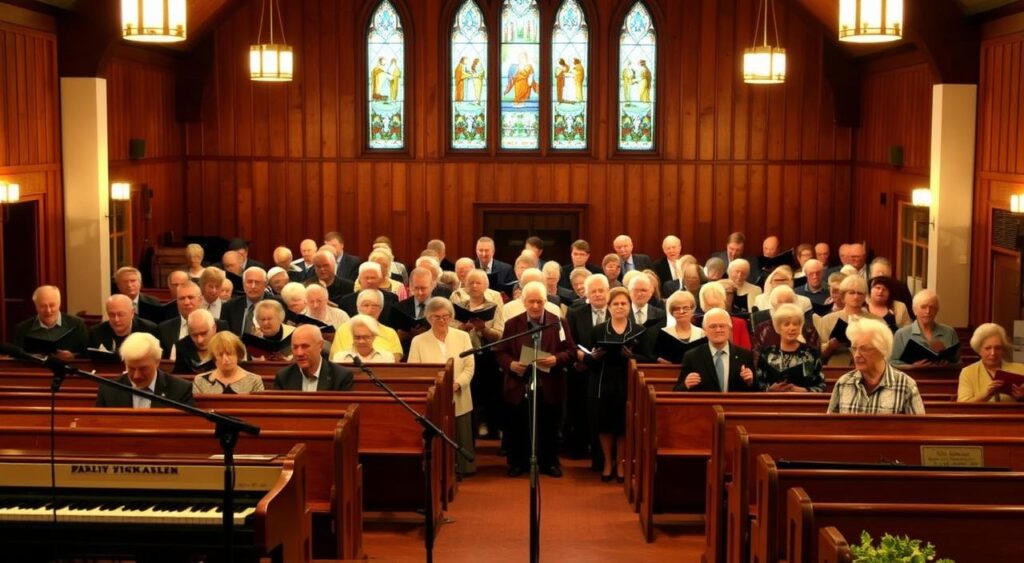
Making your hymn sing event friendly and open helps build community. When people feel included, they’re more likely to connect and have fun. Hymn sings foster connections between human beings by bringing them together through shared music and faith.
Encouraging Participation from Attendees
Getting everyone involved is key for connection. Ask people to pick songs or lead a hymn. This boosts their experience and strengthens group ties. Active participation allows everyone to join in praise together during worship. , expressing gratitude and reverence as a united group.
Hosting Post-Service Fellowship
After the event, having a get-together can strengthen community bonds. Provide snacks and places for people to talk. This helps form new friendships and makes everyone feel like they belong. Fellowship after the event also helps ground the spiritual experience in the realities of life on earth, connecting the divine to our everyday lives.
Incorporating Feedback for Future Events
Feedback helps us improve and grow. Encourage people to give their opinions, either through suggestion boxes or chats during fellowship. Listening to their ideas means your events will keep getting better, more engaging, and meaningful for everyone. Use this feedback to write new plans and improvements for future hymn sings.
Creating a Warm and Inviting Atmosphere
To make everyone feel welcome at your community hymn sing, creating a comfy and spirit-filled place is key. A carefully chosen setting boosts the mood, connecting and calming everyone. This welcoming atmosphere reflects the faithful spirit of the community, showing steadfast care and unity. It makes the event more enjoyable for all.
Decorations that Enhance Spirituality
Decorations should match a theme of spirituality and openness. Think about using flowers, banners with uplifting quotes, and symbolic items. They bring peace and sacredness to the room. Decorations can also be chosen to reflect the glory of God, emphasizing His divine majesty and the purpose of worship. These touches help make the hymn sing event reflective and full of joy, inviting everyone to dive in.
Lighting and Seating Arrangements
Choosing the right lighting is very important. Soft, warm lights or candles add comfort and a solemn feel. The way people sit is also crucial for a good atmosphere. Seats placed in circles or semi-circles make interacting easier. This setup makes everyone feel part of the community hymn sing.
Providing Refreshments
Serving snacks and drinks adds a welcoming vibe. Offering tea, coffee, and light snacks encourages people to chat more after singing. It helps build stronger community ties and makes your event stand out. Plus, a well-set snack table is comforting, improving the event’s feel.
Understanding Legal and Licensing Considerations
Planning a hymn sing concert or any event with a traditional hymn sing group means looking at the legal stuff. It’s vital to avoid any legal issues. The liturgical reforms introduced by Vatican II led to a broader range of music being used in worship, which in turn has influenced copyright and licensing requirements for liturgical music. This helps everything go smoothly.
Copyright Issues with Hymn Selections
First, figure out if your hymns are copyright-protected. Some hymns are free to use, but others might need permission. Getting permission means you’re respecting the creators’ rights.
Securing Necessary Licenses
Next, you need the right performance licenses. Contact groups like the American Society of Composers, Authors, and Publishers (ASCAP) or Broadcast Music, Inc. (BMI). They’ll help you sort it out. This step keeps your hymn sing concert free from legal trouble.
Insurance and Liability for Events
It’s important to have good insurance for your event. Liability insurance keeps you safe from accidents. It gives you and your traditional hymn sing group peace of mind, so you can focus on the music.
Reflecting on the Experience After the Event
After the hymn sing, it’s key to think back on the event. This helps us get better and keep everyone’s interest. Talking with the people who came can show us what worked and what didn’t. Reflecting on hymns that remind us of Jesus bearing all our sins can deepen our appreciation for the spiritual impact these songs have on the soul of community.
Collecting Feedback from Participants
After the event, it’s smart to ask attendees what they thought. You could use online surveys or comment cards for their opinions. This feedback is vital for making the next hymn sing better.
Sharing Highlights on Social Media
Posting the best moments on social media can bring more people together. Share photos, videos, and what attendees said to celebrate together. You can also post recordings of hymns sung during the event to highlight the communal spirit and tradition. This helps draw in more people for the next event.
Planning for Future Hymn Sings
Let the feedback and online buzz guide your next steps. Find out what people loved and what needs work. This cycle of thinking over, getting feedback, and improving helps keep the hymn sings fresh and engaging.
FAQ
What is the importance of traditional hymn sings?
Traditional hymn sings bring people together and remind them of their history and community. They are a chance to share faith and traditions which strengthens the bond among members. This makes everyone feel like they belong and supports their spiritual journey.
What historical context should I consider when planning a hymn sing event?
Historically, hymn sings helped pastors comfort and spiritually guide their followers. These events honor the rich history of sacred music. They link people to the long-standing tradition of spiritual singing.
How can participating in a hymn sing benefit individuals and the community?
Joining a hymn sing makes people feel part of a group and reassures them spiritually, often because they are inspired by the shared experience of faith . It encourages unity and strengthens the community. People enjoy connecting through music and shared faith experiences.
What factors should I consider when choosing a venue for a hymn sing event?
Pick a venue that’s easy for everyone to reach and has good sound quality for singing. The right place makes the event special and successful.
How can I ensure the venue is accessible to all participants?
Make sure the venue has ramps, elevators, and accessible bathrooms. It should have enough room for people of all abilities. Comfort for every attendee is key.
Why are acoustics important in a hymn sing venue?
Great acoustics make sure everyone can hear the hymns well. This turns the event into a moving and immersive experience for the audience.
How should I go about selecting hymns for the event?
Mix well-known hymns with newer ones. Keep the community’s taste in mind while choosing. This way, everyone finds something they like.
What are some popular traditional hymns to include?
Include favorites like “Amazing Grace” and “How Great Thou Art.” These songs touch people’s hearts and bring back memories.
How can I involve local choirs and guest artists in the hymn sing?
Work with local choirs and invite artists who love hymn music. Their talent will enrich the event, making it unforgettable.
What methods should I use to promote the hymn sing event?
Use social media, flyers, and local news to spread the word. A strong promotional effort helps attract a big crowd.
What are some tips for managing time efficiently on the day of the event?
Plan a schedule with a variety of hymns. Keep things exciting with special moments for reflection or standout performances.
How can I encourage participation and build a strong community spirit?
Let attendees sing along and have chats after the event. This boosts community vibes and provides helpful feedback for next time.
What aspects of the ambiance should I focus on to create a welcoming atmosphere?
Use lights and decor that suit the event’s mood. Comfortable seating and refreshments make guests feel at home.
What legal and licensing considerations should I be aware of?
Get copyright permissions and the necessary licenses. Make sure insurance and liabilities are taken care of to avoid legal issues.
How should I approach post-event reflection and planning for future hymn sings?
Ask for feedback and share the event’s best parts online. Use what you learn to make future events even better.