



Chair yoga is not just for seniors or people with mobility problems. It’s a way to get a strong workout, focusing on flexibility and strength from a chair. Incorporating chair yoga into your regular fitness routine offers an accessible and effective option for improving physical health and joint mobility for people of all ages and abilities. This practice can help you stand taller, boost blood flow, and reach your fitness goals in a new way.
Key Takeaways
- Chair yoga is not just for those with mobility issues; it can offer a robust workout.
- Focuses on stretching and strengthening while seated.
- Improves flexibility and enhances posture.
- Increases blood circulation without the need for floor poses.
- Versatile practice suitable for various fitness levels.
- Can be easily integrated into an exercise routine for ongoing flexibility and strength gains.
What is Chair Yoga?
Chair yoga makes traditional yoga poses easy to do while in a seated position, with seated yoga poses serving as foundational exercises in chair yoga routines. It’s perfect for those who have trouble moving around or can’t do floor exercises. This makes yoga available to everyone, no matter their physical condition. Chair yoga focuses on gentle movement, making it suitable for a wide range of abilities.
Definition and Overview
Chair yoga lets you do yoga exercises from a chair, so you don’t have to get on the floor. It’s especially good for older adults, people who sit a lot at work, or those with limited mobility and healing from injuries. With chair yoga, you can improve your flexibility, build muscle strength, support joint health, and enhance overall physical health.
Chair yoga targets major muscle groups such as the core, legs, and arms, helping to improve strength and flexibility.
Benefits of Chair Yoga
Chair yoga helps make you more flexible, especially with various seated poses. It can also help reduce stress through mindful movement. A good set of chair yoga exercises can stretch and strengthen muscles you don’t use much. Improved flexibility chair yoga routines can make daily activities easier and more comfortable. Chair yoga also helps lessen stress and pain, and it can make your mind clearer. So, it’s a complete workout for your body and brain.
| Benefit | Description |
| Increased Flexibility | Chair yoga poses help to stretch and elongate muscles, enhancing mobility. |
| Improved Muscle Strength | A steady chair yoga sequence can promote stronger muscles and better balance. |
| Reduced Stress | Mindful movement and breathwork in chair yoga help lower stress levels. |
| Pain Relief | Chair yoga can alleviate chronic pain through gentle stretching and movement. |
| Enhanced Mental Clarity | Regular practice promotes mindfulness and mental sharpness. |
The Importance of Challenge in Chair Yoga
Chair yoga can be more beneficial when you embrace challenges. Adding advanced poses to your practice brings physical and mental gains. These make your yoga sessions more valuable. Incorporating controlled movements in chair yoga helps safely increase the challenge, allowing you to build strength and balance while minimizing the risk of injury. Let’s look at why it’s essential to add challenges and their benefits.
Chair yoga can also be a valuable component of a comprehensive exercise program, supporting overall mobility and healthy aging.
Why Challenge Yourself?
Advanced chair yoga makes you stronger in body and mind. Trying harder poses, like lifting your left leg, can make muscles stronger and improve your balance. For example, you can try a balancing pose, such as a seated version of eagle pose, to further challenge your stability and focus. This can make everyday activities easier and boost your fitness level.
It also builds mental toughness. Achieving a tough pose, such as extending your right arm, gives you confidence and a sense of victory. This can lessen worry and help you think more positively.
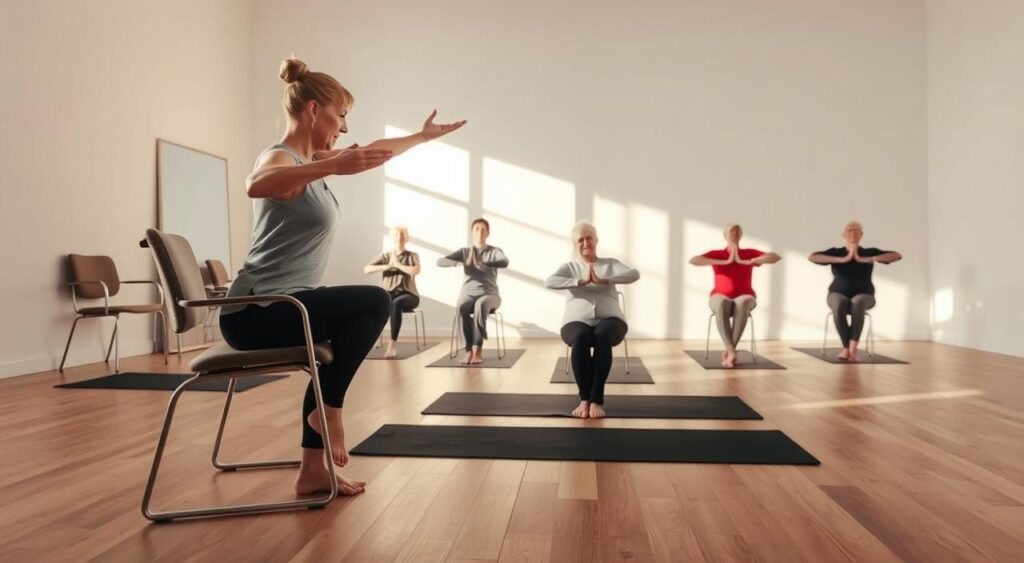
Physical and Mental Benefits
Pushing your limits in chair yoga has many benefits. On the physical side, it makes you more flexible, strengthens your muscles, and betters your balance. These improvements, including proper alignment of your right foot, lead to a healthier and more mobile body. Increased strength and flexibility can also help you perform everyday tasks more easily.
Mentally, it teaches you to keep going and stay focused. Learning advanced poses requires concentration, which clears your mind and improves focus. This balance of physical and mental challenges, including poses on the opposite side, enhances your overall well-being.
| Benefit | Physical | Mental |
| Strength | Builds muscle strength | Boosts confidence |
| Balance | Improves stability | Reduces anxiety |
| Flexibility | Enhances mobility | Promotes well-being |
Essential Equipment for Chair Yoga
Having the right chair yoga gear is key for your safety and a good practice. Always select a sturdy chair with good support and stability to ensure safe and effective chair yoga sessions. When you choose the correct equipment, such as a yoga mat, your experience becomes both comfortable and rewarding. It also meets your personal needs.
A firm chair seat provides stable support for various yoga poses, helping you maintain balance and deepen stretches during your practice.
Choosing the Right Chair
You need a stable chair for chair yoga. It should not have wheels or armrests to maintain an upright position during your practice . This prevents accidents and lets you move freely. Also, it should be tough, have a flat seat, and a firm back for support during yoga poses.
Props to Enhance Your Practice
Props like yoga blocks, blocks, straps, and cushions are great for chair yoga. They help with yoga moves, making sure you’re aligned right and stretching well. These tools make yoga doable for everyone, no matter their strength or flexibility.
“The right equipment can transform your yoga practice, offering both support and challenge in equal measure.”
Preparing for a Chair Yoga Session
Getting your space ready for chair yoga is key for a good session. Make sure your area is set up and you’re dressed right so you can sit tall during your practice. Preparing your space is an important step when starting a new exercise routine like chair yoga. This way, you get the most out of your chair yoga time.
Setting Up Your Space
First, find a quiet spot where nothing will disturb you. Make sure there are no tripping hazards around. A stable, non-slip floor, where your feet are flat on the floor, helps you keep balance when doing poses. Ensure both feet are flat on the floor for stability and proper alignment.
Put your chair on a solid surface to keep it from sliding. This helps you stay safe while practicing, especially when using the back of the chair. Keeping your foot flat on the ground during poses also helps maintain correct posture and alignment.

Wear Comfortable Clothing
It’s important to wear clothes that let you move easily. Pick clothes that let you stretch and don’t hold you back, especially around your left knee . Choose materials that keep you cool and comfy while you work out.
Think about wearing layers in case you get hot or cold. The right clothes help you concentrate and do your best in each pose, allowing for several breaths during each transition .
Key Poses for Challenging Chair Yoga
Chair yoga offers a range of poses that can enhance both your body and mind. Many of these key poses include pose stretches that gently stretch the muscles, helping to improve flexibility and reduce stiffness. Adding challenging elements to your practice with chair yoga boosts flexibility and eases muscle stiffness. These key poses will make your routine more exciting and beneficial.
Seated Forward Bend
Seated Forward Bend is great for stretching your lower back and legs. Begin by sitting upright with your left foot grounded and your knees bent, keeping your feet flat on the floor for stability and comfort. Then lean forward to touch your toes. Keep your core tight to stay stable.
Chair Pigeon Pose
The Chair Pigeon Pose eases tight hips and a stiff lower back. To perform chair pigeon, sit upright for proper alignment. For one variation, cross your right ankle over your left thigh, keeping your right knee open and relaxed. Gently hold your right ankle to deepen the stretch. For another variation, cross your left ankle over your right thigh, emphasizing the stretch in your left thigh and glute. Keep your left ankle flexed for safety. Lean into the stretch gently. This pose boosts hip mobility and suits all comfort and skill levels, especially when focusing on the left side.
Twists for Spinal Flexibility
Twists are key for a flexible spine and better movement. Try the seated spinal twist, a gentle stretch designed to improve spinal mobility. Sit tall and place your left hand on the outside of your right thigh to deepen the seated twist, while your right hand can rest on the chair for support. As you twist, gently drop your left shoulder to enhance the stretch along your left side. For a deeper twist, reach your left arm behind the chair. Hold the pose and take slow breaths, allowing your body to relax and the stretch to deepen. Repeat on both sides to keep your flexibility even. These twists, by engaging your right leg, also help digestion and reduce back discomfort, making them crucial for chair yoga.
By including the seated twist in your chair yoga routine, you’ll not only improve your spinal mobility and flexibility but also support digestion, posture, and overall well-being. Each pose has its unique advantages, leading to a stronger and more versatile yoga practice.
Creating a Challenging Routine
Building a detailed chair yoga sequence means picking poses that boost strength and flexibility. It also includes practices that calm the mind. By practicing chair yoga regularly, you can experience improved flexibility chair yoga, greater range of motion, and enhanced overall well-being. A complete routine lets advanced practitioners connect more with their practice. This makes the physical and mental benefits even better.
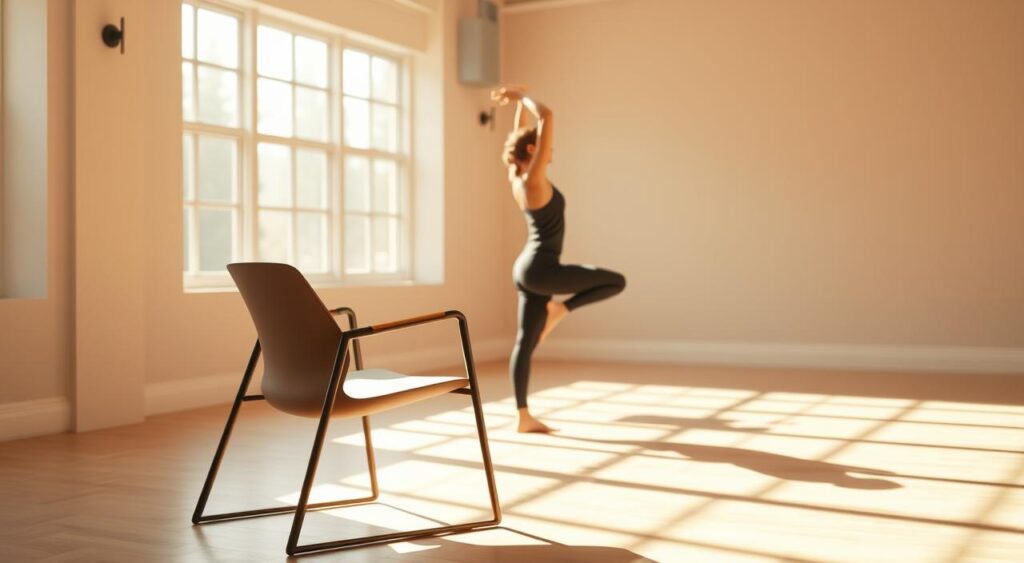
Structuring Your Chair Yoga Flow
To create a good chair yoga flow, start with a plan. Mix poses that work different muscles with those that boost flexibility. Begin with a light warm-up. This gets your body ready. Then move on to both moving and still poses. Adding moves like Seated Warrior and Chair Pigeon Pose makes it more challenging. Wrap up with a cool-down to relax your muscles and find peace.
Incorporating Breathwork
Adding breathwork to your chair yoga ups the value of each pose. Practices like Ujjayi Pranayama and Alternate Nostril Breathing deepen your yoga work. They also boost lung power and focus. Paying attention to your breath helps keep a smooth flow and a focused mind while moving between poses. Mindful breathing is especially important during chair yoga, as it helps you stay present and enhances both relaxation and safety.
Taking deep breaths during and after each pose further enhances relaxation and focus, making your chair yoga practice more effective.
Modifications for Different Levels
Chair yoga is great for all skill levels, offering both easy and tough options. It’s designed so everyone can join in and practice chair yoga , from beginners to pros. By changing the poses, everyone gets to enjoy and benefit from this flexible workout.
Beginners’ Modifications
If you’re new to chair yoga, start with simple poses. This builds your confidence and strength. You can use things like straps or blocks to help. And gentle movements are best to begin without stressing your body too much.
- Seated Mountain Pose with hands on knees for support
- Chair Warrior II using the backrest for stability
- Modified Cat-Cow with gentle spinal movements
These changes help seniors and newcomers safe and effectively start chair yoga.
Advanced Variations
Ready for more challenge? Advanced options can deepen your chair yoga journey. Holding poses longer and adding movement boosts strength and flexibility.
Try these advanced ideas to up your game:
- Dancer Pose with one leg extended and the other supported on the chair
- Extended Side Angle incorporating a deeper stretch and twist
- Chair Plank for enhanced core engagement
With these harder options, you can push your limits and keep growing in your chair yoga practice.
Mindfulness and Chair Yoga
Practicing mindfulness chair yoga brings your breath and movements together in harmony. This connection creates a deeper awareness and relaxation. Breathing deeply as you move makes the benefits of chair yoga even greater. It helps you handle stress better and improves your focus.
Connecting with Breath and Movement
Adding breath awareness to your chair yoga helps you stay in the now. Each breath, taken with purpose, guides your movements and keeps you mindful.

- Inhale: Start each pose with a big breath in, filling your chest and feeling the air in your body.
- Exhale: Let your movement follow a slow breath out, going into deeper stretches.
Enhancing Focus and Clarity
Mindfulness chair yoga sharpens your focus and mental clarity. It teaches you to live in the moment, cut down on distractions, and better your attention span.
Making mindfulness a part of your chair yoga routine boosts mental clarity. This means tackling daily tasks becomes easier and clearer.
Chair Yoga for Specific Needs
Chair yoga is a great activity that can be easily adjusted for everyone’s needs.
Adaptations for Seniors
Chair yoga is especially good for seniors to help keep their joints moving well. It changes poses so they are easier, preventing any harm from falls or pushing too hard. Using items like straps and blocks also brings extra support and steadiness during yoga.
Considerations for Injuries
People with injuries can find chair yoga very helpful, too. It’s key to change routines carefully to not hurt injured spots more. Through soft movements and focused breathing, chair yoga is a safe and powerful way to get more flexible and feel better overall.
Progressing Your Practice
Improving your chair yoga practice takes consistent work, patience, and clear goals. It’s important to track your flexibility and set realistic chair yoga goals. This helps keep you motivated and ensures you keep getting better.
Tracking Your Flexibility Gains
It’s key to watch how flexible you are becoming. Write down any changes in how far you can reach, your posture, and your overall health. Taking pictures or making videos can also show your progress. This review helps you see what needs more work and celebrate your wins.
Setting Goals
Having specific chair yoga goals is crucial. Make short-term goals, like getting better at a certain pose. Also, set long-term goals such as increasing your flexibility or improving balance. Break these goals into steps that you can handle. As you get better, update your goals to keep them challenging yet doable.
- Short-term Goals: Work on quick wins like staying in poses longer or being more flexible in certain spots.
- Long-term Goals: Go after big achievements, like better balance or doing a harder chair yoga sequence.
Advancing in chair yoga is about the journey, not rushing to the end. Always check your progress and update your goals. This keeps you focused and interested.
Common Misconceptions about Chair Yoga
Many people think chair yoga is only for the elderly or those with big physical challenges. This isn’t true. Chair yoga is great for folks of all ages and fitness levels. It offers many health benefits and is a powerful exercise option.
Debunking Myths
Some believe chair yoga is too easy and can’t really help fitness goals. But, chair yoga includes different poses that work on flexibility, balance, and strength. You don’t have to be on the floor to get a full-body workout. It’s perfect for newbies and pros alike.
Understanding Its True Potential
Chair yoga’s benefits aren’t just physical. It’s great for stress, makes your mind clearer, and improves your well-being. Adding breath work and mindfulness makes it even better for your mental health. Getting to know chair yoga’s full power can really change the game.
Let’s clear up some wrong ideas about chair yoga and highlight its perks:
| Myth | Reality |
| Only for the elderly | Beneficial for all ages |
| Too easy and not challenging | Can be adapted to be quite challenging |
| Limited to physical benefits | Includes mental and emotional benefits |
| Requires minimal effort | Effective for building strength and flexibility |
Finding Resources for Chair Yoga
Searching for chair yoga resources can make your practice richer. No matter if you’re just starting or have been practicing for years, having good guides can really uplift your yoga journey. We’ll look at what’s out there so you can get the most from chair yoga.
Online Classes and Tutorials
The internet has made it easy to find chair yoga classes. You can find lots of tutorials on sites like YouTube, Udemy, and Yoga with Adriene. They offer classes for all levels, letting everyone find the right fit. Plus, many of these platforms have free content, making it affordable to practice yoga daily.
Local Community Options
Local chair yoga classes offer a chance to practice with others. You can find them at community centers, gyms, and yoga studios all over the U.S. These local classes give you direct feedback from teachers and help you connect with a yoga community. To find classes near you, look at community boards, newsletters, or wellness apps.
FAQ
What are the benefits of Chair Yoga?
Chair yoga improves flexibility, muscle strength, and mental clarity. It reduces stress and pain. This yoga is good for all ages and fitness levels, making it a versatile workout choice.
What kind of chair should you use for Chair Yoga?
Use a chair that’s solid and doesn’t roll, to keep safe and comfortable. It should have a flat seat and a back that supports you.
What props can enhance your Chair Yoga practice?
Using props like blocks, straps, or cushions helps make poses fit your ability better. These tools make chair yoga easier or harder, depending on what you need.
How should you set up your space for Chair Yoga?
Create a special spot for your yoga that’s safe and lets you focus. Make sure the floor is stable and wear for moving freely.
What are key poses for increasing flexibility in Chair Yoga?
Poses like the Seated Forward Bend and Chair Pigeon Pose stretch your body and relax muscles. Twists work your spine, help your digestion, and lessen back pain.
How do you structure a challenging Chair Yoga routine?
A strong chair yoga routine mixes different poses to work on strength and flexibility. Adding breathing exercises helps you breathe better and keeps you energized.
How can Chair Yoga be modified for different skill levels?
Chair yoga can be toned down or up to match your skill. Beginners might use more props and easier poses. Experienced yogis can try deeper stretches and longer hold times.
How do you connect breath with movement in Chair Yoga for mindfulness?
In chair yoga, breathe in sync with your moves to feel more aware and calm. This practice sharpens focus and is good for handling stress and paying attention.
What adaptations are made in Chair Yoga for seniors or individuals with injuries?
Yoga for seniors or those hurt uses props and changed poses for a safe workout. It helps keep moving without hurting sensitive spots.
How can you track and progress your Chair Yoga practice?
To get better at chair yoga, keep practicing and watching how flexible you become. Start with small goals and add more complex poses to stay driven and get stronger.
What are common misconceptions about Chair Yoga?
Some think chair yoga is only for the old or those who can’t do much physically. But it’s a strong workout for all, full of health perks for the body and mind.
Where can you find resources for Chair Yoga?
You can find chair yoga resources online or in local classes. They give you guidance on doing poses right and staying safe.