

Online care circles have become widely popular, especially after COVID-19 hit. They serve as virtual support groups. People seeking emotional and spiritual support use them, especially if they can’t travel. Reasons might include health issues, being far away, or pandemic restrictions. These digital communities are vital for keeping social connections, which are key for our mental health, say experts. These circles also strengthen the relationship between participants, fostering mutual understanding and support. They help build strong relationships and support networks.
Online care circles can also complement traditional healthcare and medical services by providing virtual support for those unable to travel, including access to a doctor or healthcare providers for guidance.
Online spiritual care circles bring those who need remote spiritual healing together. They make sure everyone, no matter where they are, gets the support and connection they need. Some circles offer specialized support for military veterans, recognizing their unique needs and experiences. These support groups show how crucial our communities and mental health are. They bring hope and strength, even when times are tough. Many participants report a wonderful experience, feeling emotionally uplifted and more connected through these relationships.
Key Takeaways
- Online spiritual care circles have become increasingly popular since the COVID-19 pandemic.
- These virtual support groups provide essential emotional and spiritual support.
- They are accessible to those unable to travel due to health or geographic limitations.
- Remote spiritual healing sessions help maintain crucial social connections.
- This digital wellness community fosters mental health and wellbeing.
The Concept of Online Spiritual Care Circles
In today’s world, online spiritual care circles provide a special way to support and build community. People can share their wonderful experiences and encourage one another, no matter where they live.
What Are Online Spiritual Care Circles?
Online spiritual care circles are meetings on the internet where people talk about spiritual and emotional support. The process of joining and participating is simple and secure—just follow a few easy steps to get started and connect with others online. They are led by facilitators who help create a welcoming space. Here, people from different backgrounds can connect and support each other. This approach combines mental and spiritual health care online.
The Benefits of Virtual Support
One major advantage of digital wellness communities is how easy they are to join. People from anywhere in the world can find help and community in one place. These circles help people feel close to others, even if they are far away physically.
They are flexible, too, so people can join even if they have busy schedules. This means more individuals can find the help and community they need through virtual appointments .
Many participants have given great feedback about the ease and accessibility of joining these circles.
Who Can Join These Circles?
Anyone looking for spiritual connection or support is welcome in online spiritual care circles. Many participants are women, including daughters and wives, who often serve as caregivers. If you’re facing hard times, like loss or illness, or just want to grow spiritually, these circles are there for you. Family members also join these circles to support each other in facing mental health conditions and strengthen their bonds. Being part of a digital wellness community lets you find comfort and strength in not being alone.
Military veterans are also welcome and may find specialized support circles tailored to their unique experiences.
Why Choose Online Over In-Person Gatherings?
The digital age is here, making web-based faith gatherings more appealing. They offer benefits that in-person gatherings can’t match.
Online gatherings can also include access to certain medical services, such as virtual visits with a healthcare provider. These visits can be scheduled appointments, remote consultations, or follow-up interactions, offering convenience and clear documentation provided after each visit.
When considering cost, online gatherings are often more affordable and provide greater cost transparency than traditional in-person options.
Flexibility and Accessibility
Web-based faith gatherings bring unmatched flexibility. You can join in at the best times for you. This is great for those with busy lives or changing schedules. Plus, you can join from anywhere as long as you have internet.
Overcoming Geographic Limitations
With remote spiritual healing sessions, it doesn’t matter where you live. You won’t have to travel far or deal with transportation problems. This is a big plus for those in rural or isolated areas with few local resources.
Comfort of Home Environment
Web-based faith gatherings let you participate from the comfort of home. This can ease any stress or anxiety you have. Feeling comfortable helps you to share openly, which is key for true spiritual healing.
Choosing online spiritual sessions over in-person ones offers clear benefits:
| Aspect | Online Gatherings | In-Person Gatherings |
| Scheduling | Highly Flexible | Fixed Times |
| Accessibility | Available Anywhere with Internet | Location Dependent |
| Travel Requirements | None | High |
| Comfort | Home Environment | External Environment |
How to Participate in an Online Spiritual Care Circle
Getting involved in online spiritual care circles is now easier, letting you find spiritual and emotional support without leaving home. Many circles use video consultations, allowing participants to connect face-to-face with facilitators and peers from anywhere. These virtual support groups help you meet others with similar beliefs. This creates a safe place for everyone to grow together.
Finding the Right Circle
Choosing the right online spiritual care circle is important. Think about what support you need. It could be dealing with loss, learning to be mindful, or focusing on holistic health. Sites like Support Groups Central and Psychology Today are great places to look. Reading up on each group’s focus helps to see if it matches your spiritual path. For example, you might find a mindfulness group specifically for stress relief.
Technical Requirements for Participation
Before joining virtual support groups, make sure you have what’s needed. You’ll need a good internet connection and a device for video chats. Many groups use video chat platforms to create a real-time, interactive experience similar to in-person meetings. This can be a computer, tablet, or smartphone. Knowing how to use Zoom or Skype is helpful since many groups use them. Check that your device’s camera and mic work well before your first meeting.
Preparing for Your First Session
Being ready helps you benefit more from virtual support groups. Know the group’s structure and any required readings. Having a goal for what you want to get out of the meetings is good. Also, find a quiet place where you won’t be disturbed. This lets you focus on your group better.
Types of Spiritual Care Circles Available
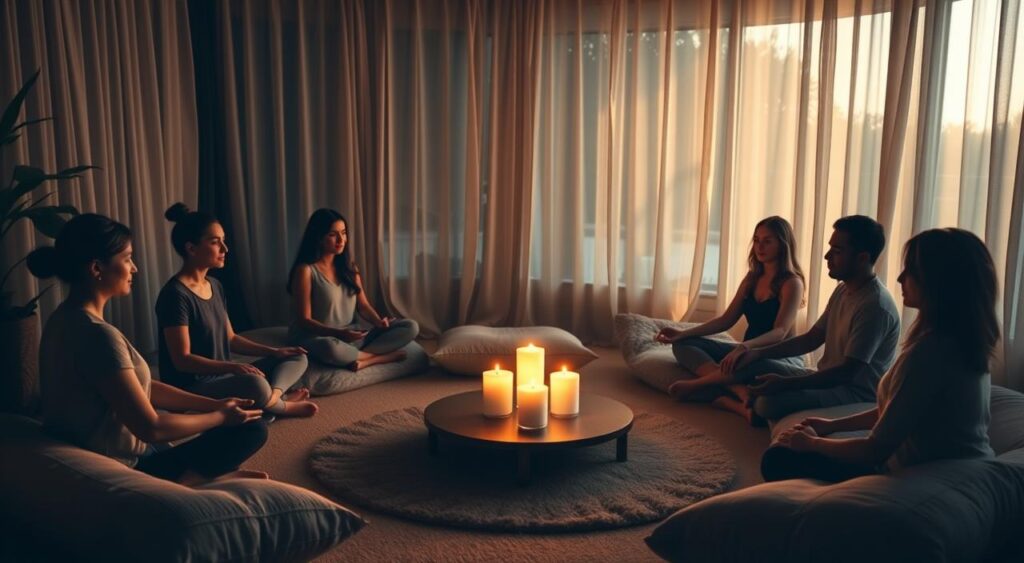
The digital wellness community is booming with different kinds of spiritual care circles. These circles are special spots where people can delve into their spiritual well-being. Some circles are designed to support individuals dealing with mental health conditions such as anxiety or depression. They join from anywhere for remote spiritual healing sessions. Knowing the types can guide you to the circle that matches your emotional and spiritual aims.
In some cases, certain circles may refer participants to a specialist, such as a mental health professional or medical expert, for more targeted support.
Meditation and Mindfulness Circles
Meditation and mindfulness circles help manage stress, leading to peace within. Sessions include guided meditations, practicing mindfulness, and learning to breathe in ways that calm your mind. Being part of this digital world aids in making these practices a regular part of your life, boosting your mental health over time. Regular participation can also benefit your physical health, such as reducing blood pressure and improving sleep.
Grief and Loss Support Circles
During hard times, a supportive group can be very healing. Grief and loss support circles offer a safe place for sharing feelings and stories, and for finding people who understand. These circles provide a space to discuss concerns such as sadness, worry, and other emotional challenges that come with loss. These sessions bring comfort and a feeling of unity, helping everyone feel less alone in their sorrow.
Holistic Healing Circles
Holistic healing circles aim to improve your whole self by blending physical, mental, and spiritual health aspects. They might include yoga, energy healing, and nutrition tips among their practices. Joining these circles in a digital wellness community helps you find a harmonious approach to your health and spiritual journey. These circles also encourage participants to recognize and address their own needs as part of their healing process.
| Type of Circle | Main Focus | Benefits |
| Meditation and Mindfulness Circles | Stress Management | Enhanced personal peace, consistent practice |
| Grief and Loss Support Circles | Emotional Support | Comfort, connection, mutual support |
| Holistic Healing Circles | Comprehensive Well-being | Balanced approach, physical-mental-spiritual health integration |
The Role of Facilitators in Spiritual Care
Facilitators are key to the Internet-based pastoral care success. Each facilitator acts as a provider of emotional and spiritual guidance. They manage group dynamics and create a safe space for everyone. It’s important to understand their qualifications and methods. This helps us see how these circles work well.
In some circles, a licensed healthcare provider may serve as a facilitator, especially when medical or mental health expertise is required.
Qualifications of Facilitators
Facilitators in online faith groups come with different backgrounds. Some are trained therapists or religious leaders. They bring deep understanding of counseling and spiritual care. Others might be experienced individuals who know a lot about spirituality and how to guide groups. What they all share is their ability to create a warm space. This space is great for open talks and growing personally.
How Facilitators Guide Discussions
Facilitators guide online talks in a special way. They use active listening and questions that make you think. Facilitators also help participants respond to complex emotional or ethical challenges that may arise during discussions. This lets everyone share and think deeply. By keeping sessions organized, they make sure there’s a good mix of talking and listening. This keeps the conversation helpful and focused.
The Importance of a Supportive Environment
A supportive environment is critical in Internet-based pastoral care. Facilitators ensure there’s respect and privacy. This makes people feel secure and important. A caring environment encourages people to speak up and connect in web-based faith gatherings. Facilitators build a community that helps everyone heal, connect, and grow spiritually.
| Aspect | Role/Benefit |
| Qualifications | Trained therapists, licensed religious leaders, or experienced peers |
| Guiding Discussions | Active listening, reflective questioning, maintaining structured format |
| Supportive Environment | Fostering respect, confidentiality, and a community atmosphere |
Supporting Chronic Conditions Through Online Care Circles
Living with chronic conditions can make it difficult to attend in person care appointments, especially for older adults or those with limited mobility. Online care circles offer a practical solution, allowing patients to access care and support through virtual appointments and visits from the comfort of their own home. This approach helps patients manage their health by providing support for ongoing diagnosis, prescription renewals, and virtual visits with healthcare providers. It makes it easier for each person to manage their health, keep up with regular appointments, and connect with others facing similar challenges. By removing the barriers of travel and physical distance, online care circles ensure that support is always within reach, helping people maintain their health and wellbeing no matter where they are. While many prescriptions can be managed virtually, controlled substances—such as certain narcotics, sleep aids, and anti-anxiety medications—typically require in-person care due to regulatory restrictions.
Addressing the Unique Needs of Those with Chronic Illness
Managing chronic illnesses like diabetes, heart disease, or bipolar disorder often requires ongoing support from a dedicated care team. Online care circles make it possible to connect with medical providers, including primary care doctors, specialists, and therapists, all working together to create a personalized treatment plan. This coordinated approach helps individuals access the treatment and resources they need to manage their condition and improve their quality of life. In addition to medical support, these circles offer therapy and support groups, giving people a safe space to discuss their experiences and feelings. By bringing together a network of providers and resources, online care circles empower individuals to take charge of their health and find the support they need every step of the way.
Integrating Spiritual and Health Support
For many people dealing with chronic conditions, spiritual support is just as important as medical care. Online care circles recognize this need by offering access to resources that nurture both physical and emotional health. Through guided meditation, mindfulness exercises, and spiritual discussions, individuals can find support for anxiety, depression, and the emotional challenges that often come with chronic illness. This holistic approach helps people feel more balanced and connected, addressing not only their physical symptoms but also their feelings and overall sense of wellbeing. By integrating spiritual and health support, online care circles provide a comprehensive path to healing and resilience.
Stories of Resilience and Ongoing Care
The journey with chronic conditions is often filled with ups and downs, but online care circles create a space where individuals can share their stories of resilience and hope. By connecting with others who understand their struggles, people find comfort, support, and inspiration to keep moving forward. These shared experiences help reduce feelings of depression and isolation, replacing them with a sense of belonging and hope. Many participants say that being part of an online care circle has helped them feel less alone and more empowered to manage their health and life. Through ongoing support and genuine connection, these circles foster a community where everyone can feel heard, understood, and uplifted.
Navigating Health Insurance and Coverage for Online Care Circles
Online care circles, such as those offered by Amazon One Medical and Circle Medical, are making mental health treatment more accessible than ever. However, understanding how health insurance applies to these services and other services is essential for patients seeking support. Health insurance plans—like HMOs, PPOs, and EPOs—each have their own rules about what types of treatment and services are covered, especially when it comes to online care. Patients should be aware that coverage for virtual care can differ from traditional in-person care, and it’s important to know what your insurance plan includes before starting treatment.
When considering online care circles, patients should also factor in the potential costs. These may include copays, deductibles, and other out-of-pocket expenses that can vary depending on the insurance plan and the specific services used. Taking the time to understand your health insurance benefits can help you make informed decisions about your mental health care and avoid unexpected costs.
Understanding Coverage for Virtual Support Services
Virtual support services, such as video consultations and online therapy sessions, are becoming a standard part of mental health care. However, insurance coverage for these services is not always guaranteed. Some insurance providers include virtual support services as part of their mental health benefits, while others may have limitations or exclusions. It’s important for patients to contact their insurance provider directly to ask about insurance coverage for video consultations, therapy, and other online support services.
In some cases, online care platforms may not accept insurance at all, requiring patients to pay for services out-of-pocket. Before scheduling an appointment, patients should confirm whether their insurance plan is accepted and what benefits are available. This step can help avoid surprises and ensure that you receive the support you need without unnecessary financial stress.
Tips for Verifying Insurance Benefits
Before beginning any online care services, it’s crucial to verify your insurance benefits. Start by reaching out to your insurance provider and asking specific questions about your insurance plan’s coverage for online care, including mental health treatment and therapy. Review your insurance plan documents to understand what services are included and any limitations that may apply.
Additionally, check with the online care platform to see if they accept your insurance and what documentation may be required. Some platforms provide clear information about accepted insurance plans and can help guide you through the process. If you are uninsured or underinsured, ask about financial assistance or sliding scale fees that may be available to help cover the cost of services.
Out-of-Pocket Costs and Financial Assistance
Out-of-pocket costs for online care services can vary widely depending on the platform, the type of services provided, and your insurance coverage. Patients may be responsible for copays, deductibles, or full payment if their insurance does not cover certain services. It’s important to ask about all potential costs before starting treatment so you can plan accordingly.
Many online care platforms understand the financial challenges patients face and may offer financial assistance or sliding scale fees based on income. Patients can also use health savings accounts (HSAs) or flexible spending accounts (FSAs) to pay for eligible online care services, helping to manage costs more effectively. By exploring all available options, patients can access the mental health support they need without unnecessary financial burden.
Collaborating with Care Teams and Medical Providers
Effective online care relies on strong collaboration between patients, their primary care provider, and other medical providers. Working together, you and your care team can develop a treatment plan that incorporates online services such as video consultations, online therapy sessions, and medication management. This approach ensures that your mental health and physical health needs are addressed in a coordinated and comprehensive way.
Your primary care provider often serves as the central point of contact, helping to coordinate care with specialists, mental health professionals, and other providers as needed. Regular communication with your care team—whether through virtual appointments or secure messaging—helps keep everyone informed and ensures that your treatment plan is working for you.
Online care circles can also connect you with a variety of medical providers, including primary care physicians, therapists, and specialists. These providers work together to deliver the services and support you need, from mental health treatment to ongoing care for chronic conditions. By staying engaged with your care team and making use of available online resources, you can take an active role in your health and wellbeing, ensuring that your treatment is tailored to your unique needs.
Personal Stories: Transformative Experiences
Online spiritual care circles let people share life-changing stories. Many participants feel treated with compassion and respect, which enhances their healing experience. This sharing heals and connects us. Listening to these stories shows how these groups help us grow and support each other emotionally.

Testimonials from Participants
Many have shared touching stories about the group’s impact. They talk about finding emotional support and growing together. One person shared how joining a mindfulness circle during the pandemic brought them relief and connection. They felt a stronger spiritual bond with each session.
Stories of Healing and Connection
Healing and connecting are common in these circles. Someone shared how a loss support circle helped them through grief. Connecting with people who understood helped them find a new way forward.
The Power of Shared Experiences
Shared experiences in these circles are very powerful. They create a caring space that helps everyone grow. This support strengthens spiritual ties and supports personal development.
“Joining an online spiritual care circle was life-changing for me. The emotional support and shared stories helped me heal in unexpected ways.” – Anonymous Participant
| Key Benefits | Participant Insights |
| Emotional Support | Participants felt understood and supported in hard times. |
| Spiritual Connection | Connecting with like-minded people strengthened their spiritual connections. |
| Personal Growth | Many saw significant growth and emotional strength. |
Best Practices for Engaging in Online Circles
Joining virtual support groups or online spiritual care circles can enrich your life. To help you benefit fully, we share essential tips for your journey.
Regularly evaluate your experiences and personal growth within the circle to maximize the benefits of participation.
Active Listening and Participation
Listening well is crucial in these groups. Being fully there shows you care and helps everyone feel valued. Sharing your own stories can inspire others to do the same. This adds life and variety to the group.
Creating a Safe Space
A safe space is key in these circles. Everyone must help make the space welcoming and free from judgment. This lets all feel comfortable to share deeply and freely.
Respecting Confidentiality
Keeping things confidential is critical. Always protect the privacy of what others share. This creates trust and makes the circle a safe space for everyone.
How Online Spiritual Care Circles Enhance Wellbeing
Joining online spiritual care circles helps improve your wellbeing. They offer a safe place for emotional help and spiritual growth. Also, they strengthen spiritual bonds and build community in isolation.
Emotional Support and Growth
These circles offer a refuge for emotional support, aiding you through tough times. Some circles provide support for individuals undergoing mental health treatment, offering a safe space to share experiences and challenges. They connect you with people on similar paths. This support is key in creating a digital wellness community.
Strengthening Spiritual Connections
The circles create a special space to share beliefs and practices. Doing spiritual activities together, like meditation, makes you feel closer to your spirituality and peers. It increases a feeling of unity in the digital wellness community.
Building Community in Isolation
Online spiritual care circles are great for those feeling alone. Regular meetings and shared experiences forge strong connections and support networks. This bond reduces loneliness, essential in building community in isolation.
Resources for Further Exploration
If you want to learn more about online spiritual care circles, many resources are available. You can find helpful books, articles, and platforms. They can help grow your knowledge and offer full support.
Some online platforms also provide guidance on managing and understanding your medical records for better health outcomes. Additionally, some platforms offer access to medical services, including virtual consultations and support for ongoing health needs.
Recommended Books and Articles
There are lots of books and articles about the good points and methods of online spiritual care circles. They give you a wide view and expert advice. This helps you improve your online spiritual care.
Online Platforms Offering Circles
Platforms like Meetup and Facebook make it easy to find and join online spiritual care circles. Some platforms also allow you to schedule an appointment for group or one-on-one support sessions. They let you meet people who think like you do. And you can talk about spiritual topics without leaving your house.
Additional Support Services
Other options, such as Wisdo and Zencare, offer additional support services. These services can help treat specific emotional or spiritual challenges through personalized support. They provide more personal resources. These services often have one-on-one support, making it simpler to tackle specific issues and improve your spiritual health.
Future of Online Spiritual Care Circles
Online spiritual care circles are becoming very important. Trends show more people joining as they learn about the benefits. These circles connect people worldwide, helping them find spiritual support easily.
As online spiritual care circles evolve, they may become more closely integrated with healthcare systems to provide holistic support.
In the future, online spiritual care circles will likely integrate with virtual care platforms, allowing for more comprehensive and accessible support through on-demand and remote services.
Trends in Virtual Support Communities
More and more people join virtual support communities. They are great for those who are busy or live far away. These communities make everyone feel included, strengthening bonds.
The Potential for Expansion and Growth
Online spiritual care circles have a lot of room to grow. In the future, these circles may even offer options for primary care visits as part of their expanded services. As we understand more about mental and spiritual health, more people look for new kinds of support. This could lead to better, more varied options for everyone.
Innovations in Online Care Practices
New tech is making online spiritual care even better. Future innovations may include seamless integration with insurance for virtual care services, making support more accessible. Think of being in a VR setting, which makes the meetups feel real. Plus, AI tools offer custom advice and instant reactions. These changes will greatly improve how we get spiritual and emotional help online.
FAQ
What Are Online Spiritual Care Circles?
They are places online where people can share and support each other in a structured way. They help provide emotional and spiritual care over the internet, no matter where people are.
What Are the Benefits of Virtual Support?
Virtual support makes it easier to reach a large community, no matter the distance. People can join in from any place with internet, which is great for those with health or mobility challenges, or if they live far from big cities.
Who Can Join These Circles?
Anyone looking for spiritual connection or community support can join. It doesn’t matter where you are or what challenges you’re facing.
Why Choose Online Over In-Person Gatherings?
Online gatherings are more flexible and accessible. They are a good choice for people who find it hard to move around. Being at home can also make it easier if you’re feeling upset or unwell.
How Do Online Spiritual Care Circles Overcome Geographic Limitations?
With the internet, people from all over can meet in one online place. Anyone with an internet connection can join without having to travel.
What Are the Technical Requirements for Participation?
You’ll need a good internet connection and a device for video calls, like Zoom or Skype. Some groups might ask you to follow certain technical rules.
How Can I Find the Right Online Spiritual Care Circle?
Look on websites like Support Groups Central, Psychology Today, Meetup, and Facebook. They list many circles, so you can find one that fits your needs or beliefs.
What Types of Spiritual Care Circles Are Available?
There are many types, including ones for meditation, dealing with loss, and holistic healing. They all aim to help with your spiritual and emotional health.
What Qualifications Do Facilitators of These Circles Have?
Leaders of these groups vary. Some are therapists, religious leaders, or have a lot of experience. They make sure discussions go well and help participants prepare for their appointment, keeping the group safe and focused.
What is the Role of Facilitators in These Circles?
Facilitators keep discussions on track, look after the group, and make sure everyone feels safe to share. They help the group stay helpful and respectful.
What Are Testimonials Saying About These Circles?
People say these groups make them feel less alone, especially during tough times like the pandemic. They find emotional support, growth, and receive great feedback on their stronger spiritual connections.
How Can Participants Ensure Confidentiality?
Keeping things private is key. Everyone agrees to keep personal stories within the group, making it a safe place to share.
How Do Online Spiritual Care Circles Enhance Wellbeing?
These groups offer understanding and help people grow spiritually. They create a feeling of belonging and strength, especially when people feel isolated.
Where Can I Find More Resources on Online Spiritual Care Circles?
There’s a lot out there—books, articles, and websites. Look on platforms like Meetup and Facebook or services like Wisdo and Zencare for help and circle directories.
What Does the Future Hold for Online Spiritual Care Circles?
The trend is growing and improving. New tech makes these groups more helpful and easier to join, and also helps people understand how to pay for the growing need for mental and spiritual health support.